September 2, 2026
6 min
Discover the key metrics orthodontists can use to track leads, consultations, treatment starts, marketing costs, and ROI for smarter growth decisions.

June 6, 2026
6 min
Track first-touch for awareness, last-touch for emergencies, and multi-touch for dental implants to optimize your marketing spend.
When we first took over the growth strategy for a multi-location dental practice, our team was celebrating what looked like an absolute home run: our Google Ads dashboard showed a flood of new implant leads.
But when we cross-referenced those numbers with our practice management software, the reality hit us like a cold splash of water. Only a tiny fraction of those leads had actually booked a chair. The rest had clicked our high-intent PPC ad, called the front desk, and then vanished.
Where did our actual high-value cosmetic and restorative cases come from? As it turned out, many found us through a local SEO blog post six weeks prior, read three of our Google reviews, and only clicked the Google Ad because it was the fastest way to find our phone number when their tooth finally cracked.
If your practice only looks at the final click, you are making major budgeting decisions based on a fiction. In an era where dental service markets in the U.S. exceed $179 billion, and over 90% of practices are battling intense DSO-backed competition and overhead constraints, you cannot afford to guess. This guide will break down how to accurately measure your patient acquisition attribution dental practice data so you can stop wasting ad spend and scale what actually drives production.
Before choosing a model, we need a clear definition. Dental marketing attribution is the analytical process of identifying which marketing touchpoints a patient interacts with on their journey from stranger to a scheduled appointment in your chair, and assigning a specific financial value to each of those steps.
Think of it like a game of basketball. If your point guard (SEO) steals the ball, passes it to the shooting guard (Facebook Retargeting), who passes it to the center (Google PPC) for an easy layup, who gets the credit?
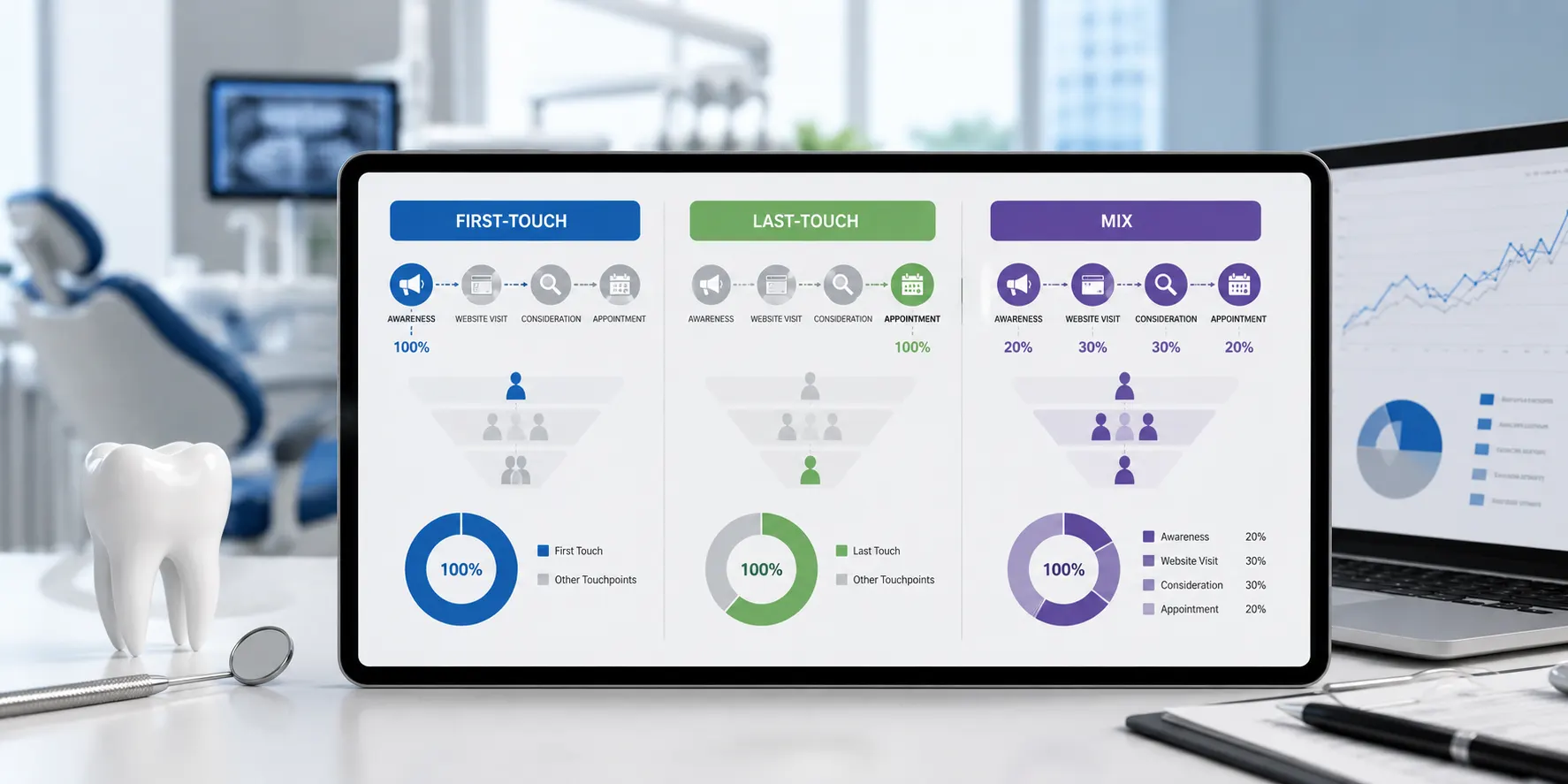
If you say only the center, you are using last-touch attribution. If you say only the point guard, you are using first-touch attribution. In dental marketing analytics, relying on an oversimplified model means you might end up cutting funding to the very channels that set up your biggest wins. Practices that develop building a comprehensive growth roadmap are often better equipped to understand how each channel contributes to long-term patient acquisition.
The patient journey for a dental cleaning looks vastly different from the journey for a $15,000 full-mouth rehabilitation. Let’s break down the three primary frameworks used for measuring ROI dental marketing campaigns.
This single-touch model awards 100% of the conversion credit to the very first marketing channel the patient encountered.
This model assigns 100% of the credit to the final touchpoint the patient interacted with immediately before scheduling.
Multi-touch attribution for dentists tracks every digital interaction a patient has across their entire decision lifecycle and distributes financial credit among them.
There is no one-size-fits-all model. The right attribution method depends entirely on the clinical services you are actively promoting.
For Emergency & General Dentistry, the patient journey is short and simple. Driven by urgent need, immediate location proximity, and insurance match, the time between problem and booking is usually hours, not weeks. For these cases, Last-Touch Attribution works best because the final click is the driver.
For High-Value Elective Treatments like dental implants or veneers, the journey is long and complex. Driven by clinical trust, financing options, and heavy emotional consideration, patients often take 30–90 days to pull the trigger. A Multi-Touch (Mix) Model is recommended here because you must see how your top-of-funnel content supports your bottom-of-funnel ads.
For New-to-Area Campaigns, where patients are systematically replacing their old providers after moving, the journey is moderately complex. First-Touch Attribution works exceptionally well here because it focuses your budget tightly on pure visibility and initial local capture mechanics.
If you are a practice manager or owner looking to get clean data without an advanced degree in analytics, follow this step-by-step framework to bridge the gap between digital clicks and real production numbers.
?utm_source=facebook&utm_medium=cpc&utm_campaign=implants). This ensures GA4 categorizes incoming traffic sources explicitly.Data is a powerful servant but a poor master. When analyzing your dental marketing attribution, remember that a patient's decision to trust you with their smile is inherently human and rarely completely linear.
If your marketing reports show that paid ads are driving all your bookings, look a layer deeper. Your local organic rankings, video testimonials, and community presence are likely doing the heavy lifting to validate that final click. Use last-touch models to manage your short-term ad optimization, but lean on a multi-touch mindset to safeguard the long-term clinical authority of your practice.
The most frequent mistake is tracking generic "Contact Us" page visits instead of hard, form-completed conversions and matching them to actual phone calls. This results in inflated lead metrics that do not correspond to actual patient check-ins or revenue generated in your practice software.
You can blend offline word-of-mouth or mailer channels with digital metrics by using dedicated QR codes or custom tracking landing pages (e.g., https://yourpractice.com/smile)Additionally, your front-desk team must strictly audit and cross-reference new patient intakes with an onboarding question like, "What specific piece of our marketing first brought us to your attention?"
For a single-chair general practice focusing heavily on standard local cleanings, standard GA4 tracking paired with call monitoring is perfectly adequate. However, if you are running a multi-location office or a specialty cosmetic/orthodontic clinic spending more than $5,000 a month on ads, advanced multi-touch systems are absolutely essential to prevent thousands of dollars in wasted ad spend.



September 2, 2026
6 min
Discover the key metrics orthodontists can use to track leads, consultations, treatment starts, marketing costs, and ROI for smarter growth decisions.
August 31, 2026
8 min
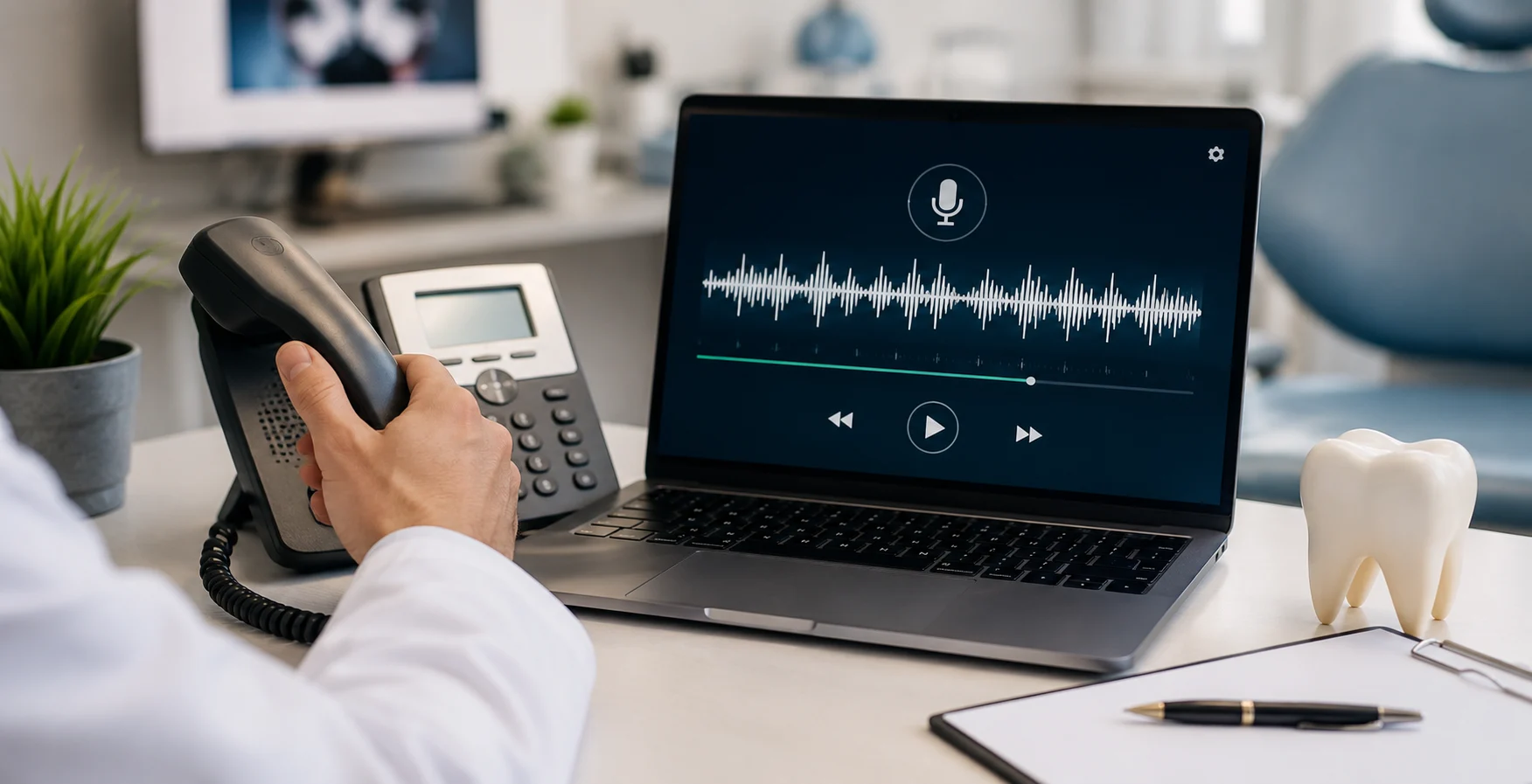
Call recordings help dental practices uncover missed booking opportunities, improve patient communication, train front desk teams, and connect calls to revenue.

August 31, 2026
8 min
Learn how after-hours patient communication helps dental practices stay responsive, support patients, capture bookings, and reduce front desk pressure.
Sign Up Now & Someone from Our Team Will Be in Touch Shortly!
Use the form below to send us a message, and we’ll get back to you as soon as we can.
.webp)
Track every marketing dollar and optimize patient conversions with ConvertLens. Gain valuable insights from your campaigns, ensuring you never miss a potential patient. Maximize ROI and grow your practice effortlessly.
-p-500.webp)