September 30, 2026
10 min
Dental AI agents can screen patient inquiries by treatment need, urgency, insurance, and location, handing your front desk only booking-ready leads.
January 23, 2026
7 min
Discover how dental office software enhances efficiency, patient engagement, and overall practice growth with ten key benefits.

If you’re a dentist, manager, endodontist, or running a university clinic, you’re not after theoretical improvements. You want things that work, reducing chaos, errors, and tedious tasks, and making patients glad they picked you. Here’s what happens when you use contemporary dental software, especially the kind that runs in the cloud and connects patient solutions into something more than the sum of its parts.
This isn’t just buzzwords. What follows is a pragmatic (and, I hope, sharp) take on the ten biggest ways dental office software changes a practice, whether you’re a single-office operation, growing a regional group, practicing general dentistry or endo, or experimenting in a teaching clinic. No hand-waving: specifics on paperless benefits, why a centralized EMR isn’t optional, and how analytics aren’t just dashboards—they’re leverage if you pay attention and use them.
Scheduling that Just Works, and No-Shows That Don’t
When you automate scheduling and layer in reminders (especially by SMS, which is almost rude in its effectiveness), no-shows plummet; industry and study data suggest reductions around 25%. In at least one case, SMS drove no-shows below 2%. The real play here is teams freed from phone tag and appointment books that aren’t basically fiction.
One Patient, One Record, Zero Sheet-Chasing
A centralized EMR isn’t just tidier; digital forms and unified records stomp out duplicates and get you out of the land of “Who updated this chart?” Cloud-based tools make paperless actually feasible, and charting isn’t a repetitive stress injury anymore, whether you’re general or endo.
Billing, Claims, and Insurance Handled, or at Least Understandable
With integrated eligibility checks and digital claims, the typical lost time waiting for payments or cleaning up insurance mistakes drops. Automation here is leverage, not just clerical relief: faster cash flow, fewer problems at the front desk. Ask Dentrix or any serious vendor about just how much more confidently first claims get accepted when ERA workflows are dialed in.
Not Just Communication, but Real Patient Engagement
Appointment portals, two-way texting, mass updates, and recall follow-ups aren’t bells and whistles. Patient response rates, especially for recall and reminders, improve measurably. Stack reminders and portals with self-serve scheduling: more shows, less chasing.
You Don’t Need Reports. You Need Signals.
Practice analytics aren’t just tables; they’re insight. You get actual visibility into production, collections, new patient flow, and even what percent of your accepted treatment is walking out the door unbooked. When you integrate this data with lead sources (think ConvertLens), you know which of your marketing dollars did something and which didn’t.
Access, Security, and Compliance: Actually Possible in 2024
Cloud platforms aren’t just about anywhere access; they bring encryption, audit trails, HIPAA and GDPR controls, and compliance that isn’t “cross-your-fingers.” For multi-site groups, or just to sleep at night, this is non-negotiable.
Billing and Payments: Frustration Out, Flexibility In
Integrated payment tools (think adit pay, CareCredit) minimize friction, let patients finance treatments, and keep billing out of the critical path. You get less outstanding A/R, less apologizing for mistakes, and more gratitude that you didn’t make payment complicated.
Treatment Planning, Imaging, and eRx, Together Rather Than Apart
Integrated imaging, e-prescribing, and treatment plans in the EMR mean fewer clicks and less context-switching. Clinical decisions get faster, and you actually live up to the promise of evidence-based dentistry. Or at least you have a fighting chance.
Phones Alone Don’t Build a Team
Mobile apps and collaborative tools let everyone, from the front desk to the clinical team, share charts and make instant schedule changes, right on the floor. You see throughput go up and confusion and repetition go down.
Systems that Grow as You Do (or Don’t Get in Your Way)
Whether you’re adding a second office or a twelfth, modern cloud software lets you scale, standardize fee schedules, and not have your tech stack strangle your ambition. This is as true for dental schools as DSOs; the pain of growth shifts from technology to people (which is where it ought to be).
Scheduling efficiency improves significantly with automation. Before implementation, practices typically experience a 5–10% no-show rate and frequent missed appointments. After adopting automated reminders, no-shows can drop by approximately 25%, with SMS reminders reducing rates to as low as 1.9%. These improvements are usually achieved within a few weeks to a few months, as supported by Dentistry Dashboard data and peer-reviewed studies.
Claims processing also becomes more efficient. Traditionally, insurance claims require manual checks and often result in delayed payments. After optimization, practices benefit from faster insurance verification and lower denial rates. These results generally take several months to materialize and are well documented in Dentrix documentation.
Front-desk workload is substantially reduced through digitization. Previously, staff spent significant time on repetitive manual data entry and paper-based processes. With online forms and a unified EMR system, practices can reclaim several hours of staff time. These gains are typically realized within 1–3 months, as shown in NexHealth and CurveDental use cases.
Marketing ROI becomes clearer and more measurable with proper analytics. Before implementation, marketing channels are often untracked, leaving conversion rates unclear. After integrating analytics tools, lead-to-patient conversion can be accurately tracked and optimized. Improvements usually appear within 1–6 months, with examples from ConvertLens and Databox KPI dashboards.
If you’re not turning scheduling and patient data into real signals, that’s an opportunity left on the table. The combination of a unified EMR, paperless interfaces, and automated claims/billing (with payment integrations like adit pay and voice) means you’re not just running faster, you’re running more intelligently, and patient and business outcomes improve together.
What the evidence really says:
When you combine robust reminders with online scheduling and integrate your EMR, you not only see no-shows drop, but also patient satisfaction rise. Add real metrics, and the possibility of evidence-based improvement is no longer theoretical; it’s operational reality for private practices and teaching clinics alike.
If there’s one thing people miss about choosing dental software, it’s this: The best results don’t come from any one tool, but from the way your EMR, billing, imaging, marketing, and payments tie together. This web turns paperless from a marketing line into a painless reality and gives you speed and intelligence that accumulate relentlessly.
Upshot: Cloud technology means your practice (or school clinic) always has access and visibility, whether that’s on the next chair or in another timezone. For scaling and teaching, that’s everything.
Q: What actually changes with dental office software?
A: You get more than speed: from smarter scheduling to a paperless office, unified EMRs, claims that don’t linger, two-way patient communication, and trustworthy analytics. These aren’t minor upgrades; they change both work and patient satisfaction.
Q: Will this really cut down no-shows?
A: In practice? Yes, by sizeable margins. When you combine online scheduling with reminders (especially SMS), real-world reductions hit 25%, and you’ll see studies bringing rates below 2% with targeted interventions.
Q: Is cloud software safe and legit for compliance?
A: The leading vendors in this space now routinely offer encryption, access controls, audit logs, and compliance that’s been through a legal ringer. Don’t just take their word: audit their controls, especially around HIPAA and GDPR.
Q: How soon can we expect ROI?
A: For practices that actually implement it, time savings and improved workflows show up within 3–6 months. That’s staff hours, more appointments kept, and cash flow. But the real ROI? The mindset shift to data-driven improvement (if you lean in).
Q: Will this integrate with imaging, payments, and insurance?
A: Yes, for any software worth its salt. You get imaging/treatment in the EMR, e-prescribing, in-system payments (adit pay and CareCredit), automated claims, and insurance checks; the whole patient journey is finally connected.
Q: How can you actually measure marketing and conversion?
A: Use platforms that tie CRM and marketing channels directly into your practice system (ConvertLens, for instance). You finally see what campaigns produce real patients and can focus spending where it’s proven.
Q: What’s the essential difference between EMR and practice management software?
A: The EMR is clinical, diagnosis, documentation, and planning. The practice management system runs scheduling and admin. Modern cloud software usually merges both, with reporting and analytics as a backbone.
Q: Should mobile access factor into our choice?
A: Absolutely. A mobile app isn’t just a check-the-box; it’s about real-time charting and instant comms, which translates to workflows that win more and frustrate less.
Q: So, will all this actually improve outcomes for patients?
A: If you want better outcomes, nothing beats good records and follow-up. Software, done right, means precise EMRs, connected imaging, proactive recall, and quantitative insight, all drivers of better patient care and satisfaction (with less stress all around).



September 30, 2026
10 min
Dental AI agents can screen patient inquiries by treatment need, urgency, insurance, and location, handing your front desk only booking-ready leads.

September 27, 2026
8 min
See the 10 key KPIs dental practices should track for AI receptionists, including call resolution, booking rates, cost per appointment, and ROI.
September 24, 2026
6 min
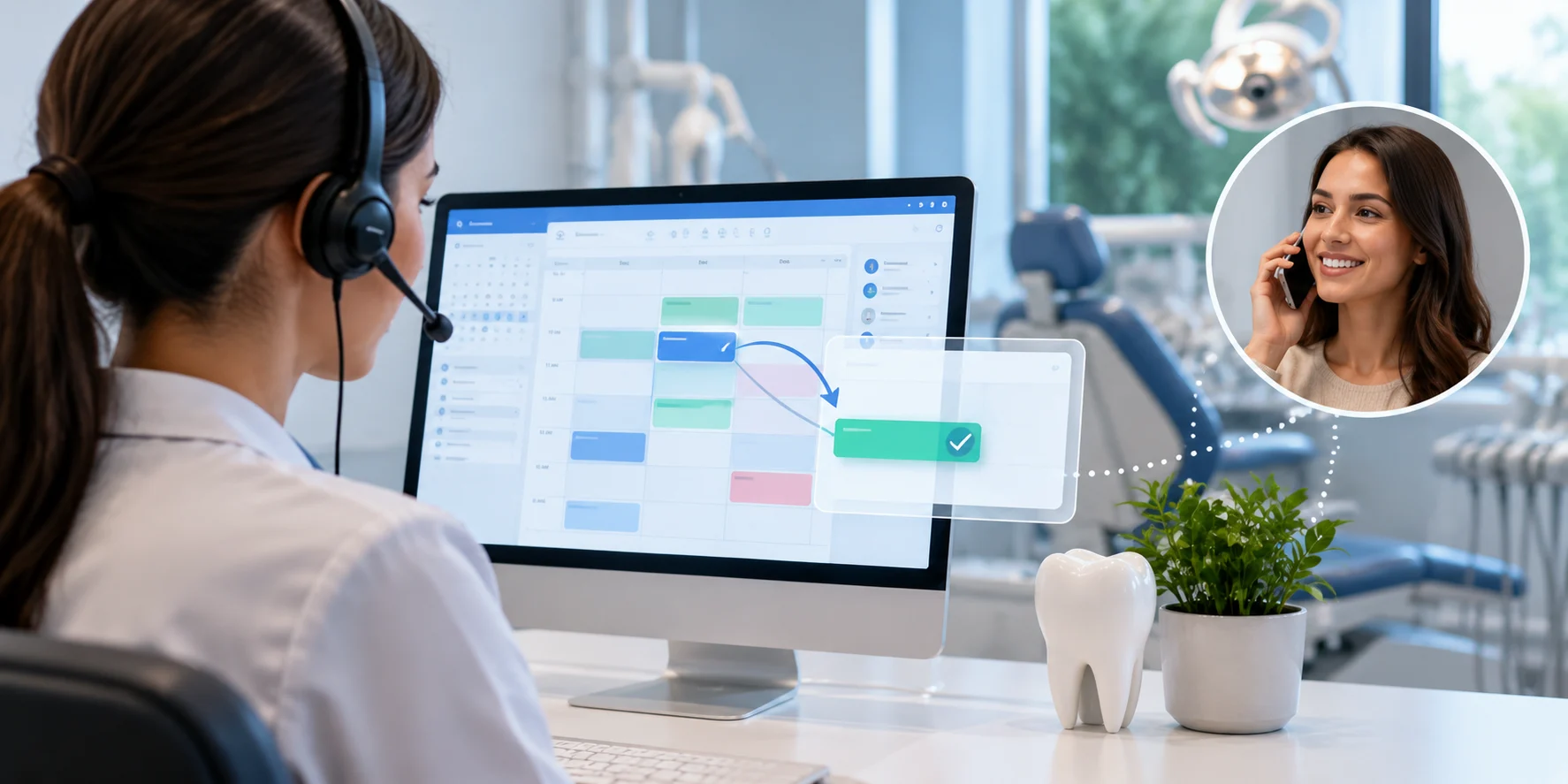
An AI receptionist checks real-time schedules, matches providers and rooms, and confirms before updating, helping dental practices reschedule appointments without double-booking.
Sign Up Now & Someone from Our Team Will Be in Touch Shortly!
Use the form below to send us a message, and we’ll get back to you as soon as we can.
.webp)
Track every marketing dollar and optimize patient conversions with ConvertLens. Gain valuable insights from your campaigns, ensuring you never miss a potential patient. Maximize ROI and grow your practice effortlessly.
-p-500.webp)