September 2, 2026
6 min
Discover the key metrics orthodontists can use to track leads, consultations, treatment starts, marketing costs, and ROI for smarter growth decisions.

June 6, 2026
7 min
Reduce CPA for high-value dental treatments by targeting long-tail, high-intent keywords, adding financial qualifiers to landing pages, and using video testimonials to build deep patient trust.
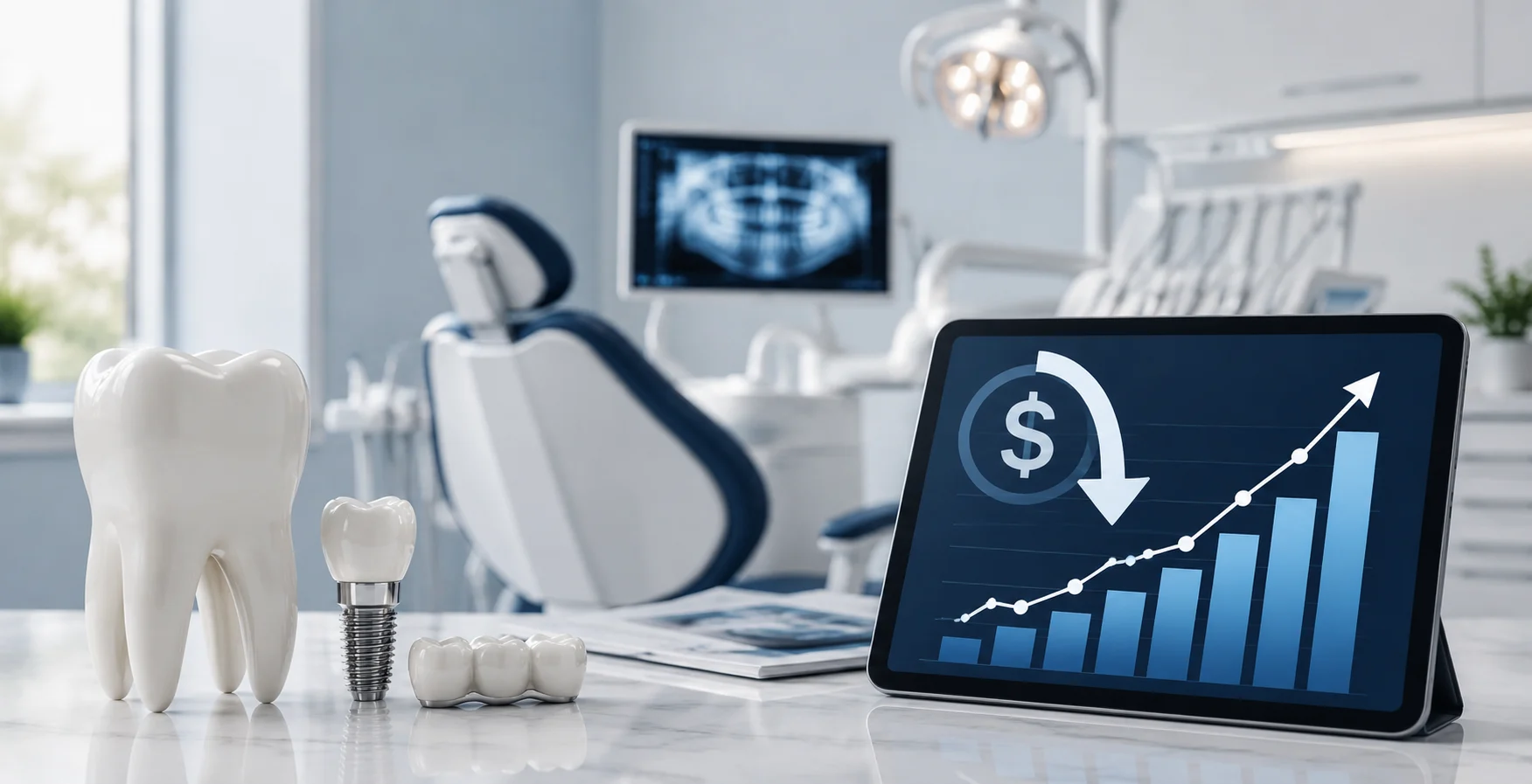
Running paid traffic for general dentistry is relatively straightforward. Someone has a toothache, they search for a local clinic, they book an appointment. But when you are targeting high-ticket, life-changing procedures like full-mouth reconstructions, dental implants, Invisalign, or porcelain veneers, the math changes completely.
Suddenly, your dental ads cost per lead skyrockets, your sales cycle stretches across months, and your budget evaporates.
If you are a dental practice owner or a seasoned marketer, you don't need a lecture on how to set up a basic Google Ads campaign. You need to know why your current traffic isn't converting and how to structurally optimize your dental marketing budget to acquire patient cases that are worth $5,000 to $30,000+.
Over the past decade managing millions in specialized medical ad spend, our team has learned that scaling high-value dental treatments requires shifting from "volume-chasing" to "intent-filtering." Here is the exact, data-backed strategy we use to lower your cost per acquisition.
If you only have two minutes, here is how to reduce CPA for dental treatments that carry high case values:
Before diving into tactics, let's establish a baseline. Dental CPA (Cost Per Acquisition) is the total marketing spend required to get a single paying patient through your door for a specific treatment. It is calculated by dividing your total ad spend by the number of closed, scheduled, and accepted treatment plans.
The fastest way to experience a lower cost per acquisition in dental marketing is to audit your keyword match types.
When marketers target high-value dental procedures, they often bid on short-tail keywords like "dental implants" or "veneers near me." In competitive metropolitan markets, these clicks can cost $15 to $45 per click. Worse, a massive percentage of that traffic consists of people doing preliminary research, comparison shopping, or looking for cheap Medicaid options.
Instead, structure your search campaigns around High-Intent Long-Tail Keywords and Financial Qualifiers. For example, instead of targeting broad phrases like "clear aligners" or "fix missing teeth," you want to focus heavily on phrases that bundle a base keyword with action intent and financial intent. A prime target would be "dental implant payment plans" or "Invisalign financing options."
According to historical industry data, the primary barrier to high-value treatment acceptance isn't clinical fear—it is affordability. By targeting terms that specifically mention financing, you catch prospects who have already decided they want the treatment; they are simply trying to figure out how to pay for it. Combining these searches with deeper patient behavior insights can further help identify which prospects are most likely to move forward with treatment.
Most digital marketers are obsessed with conversion rate optimization (CRO) metrics like lowering form fields to maximize lead flow. For a $150 teeth cleaning, that works. For a $25,000 All-on-4 dental implant case, it is marketing suicide.
When you make your forms too easy, you flood your front desk with low-quality leads, driving up your operational costs and rendering your profitable dental lead generation metrics meaningless.
To fix this, introduce strategic friction via multi-step interactive forms. Start by asking how many teeth they are looking to replace, whether a single tooth, multiple, or a full arch. Next, ask about their primary goal, such as chewing comfort, confidence, or pain relief. Finally, ask how they plan to fund the treatment, offering options like private insurance, out-of-pocket, or monthly financing plans.
This approach serves two purposes. First, it qualifies the prospect before your team wastes time on the phone. Second, it shifts the user's mindset from a transactional click to a personalized clinical evaluation, which drastically increases downstream consultation show-up rates.
No one clicks a Facebook ad for cosmetic veneers and books a $10,000 appointment on the spot. High-value cosmetic and restorative cases require a structured nurture ecosystem. If your cold traffic goes to a landing page, you must have a multi-layered retargeting sequence running on Meta (Instagram/Facebook) and YouTube to handle conversion anxiety.
During the first week after their initial click, hit them with real video testimonials highlighting before-and-after journeys to build emotional resonance and visual proof. In the second week, pivot to content that introduces the doctor and explains the technology used at the clinic, which builds authority and removes clinical fear. By the third and fourth weeks, serve targeted ads explaining your exact financing options to remove the final pricing objection.
Expert Insight: Ensure your before-and-after imagery focuses on the entire face, not just a sterile close-up of teeth. Prospects want to buy the confidence, youthfulness, and lifestyle of a new smile, not the medical mechanics of a titanium post.
You can build the most beautiful, mathematically perfect ad campaigns in the world, but if your client's front desk takes 4 hours to call an inbound lead, your CPA will remain artificially high.
Modern ad platforms like Google and Meta rely heavily on conversion feedback loops via Conversions API and Offline Conversion Tracking. If a lead comes in and sits cold, it never transitions into an actual booked consult within your CRM. If you don't feed that success data back to the ad network, the platform's AI cannot optimize its targeting to find more high-value buyers.
Implement a strict 5-Minute Lead Rule. If an implant lead is not called within 5 minutes, the likelihood of contacting that lead drops by over 80%. Consider deploying automated SMS conversation starters within your CRM to bridge the gap instantly when a lead submits a form after hours. Tracking outcomes through patient value segmentation can also help determine whether your fastest-response leads are translating into the most profitable treatment cases.
Reducing your CPA for high-value dental procedures isn't about spending less money; it's about allocating your capital with surgical precision. By filtering out low-intent search traffic, using landing pages to screen for financial readiness, building a robust video trust funnel, and tightening your office's lead intake response times, you will see your acquisition costs fall while your case acceptance values climb.
While it varies significantly by geographic market competitiveness, a healthy Cost Per Acquisition (CPA) for a closed dental implant case typically ranges between $1,500 and $3,000. Do not confuse this with Cost Per Lead (CPL), which usually sits between $50 and $150.
This is almost always driven by a lack of financial qualification on your landing pages or a slow intake response time at the practice level. If your ads focus strictly on "free consultations" without mentioning affordability, financing, or the premium nature of the treatment, you will attract high volumes of un-qualified leads who cannot afford the actual treatment plan.
Use both, but give them completely different roles. Use Google Search Ads to target bottom-of-funnel users who are actively searching for immediate solutions like implant specialists. Use Facebook and Instagram Ads as a top-of-funnel awareness tool or a retargeting engine to nurture prospects with transformation videos and patient testimonials.



September 2, 2026
6 min
Discover the key metrics orthodontists can use to track leads, consultations, treatment starts, marketing costs, and ROI for smarter growth decisions.
August 31, 2026
8 min
Call recordings help dental practices uncover missed booking opportunities, improve patient communication, train front desk teams, and connect calls to revenue.

August 31, 2026
8 min
Learn how after-hours patient communication helps dental practices stay responsive, support patients, capture bookings, and reduce front desk pressure.
Sign Up Now & Someone from Our Team Will Be in Touch Shortly!
Use the form below to send us a message, and we’ll get back to you as soon as we can.
.webp)
Track every marketing dollar and optimize patient conversions with ConvertLens. Gain valuable insights from your campaigns, ensuring you never miss a potential patient. Maximize ROI and grow your practice effortlessly.
-p-500.webp)