October 7, 2026
5 min
Missed-call text-back vs. AI receptionist for dental practices: what each handles, when each wins, and which recovers more booked appointments.
April 18, 2026
3 min
Learn how dentists can score leads using treatment intent and value to prioritize high-quality patients, improve conversions, and increase revenue without increasing ad spend.
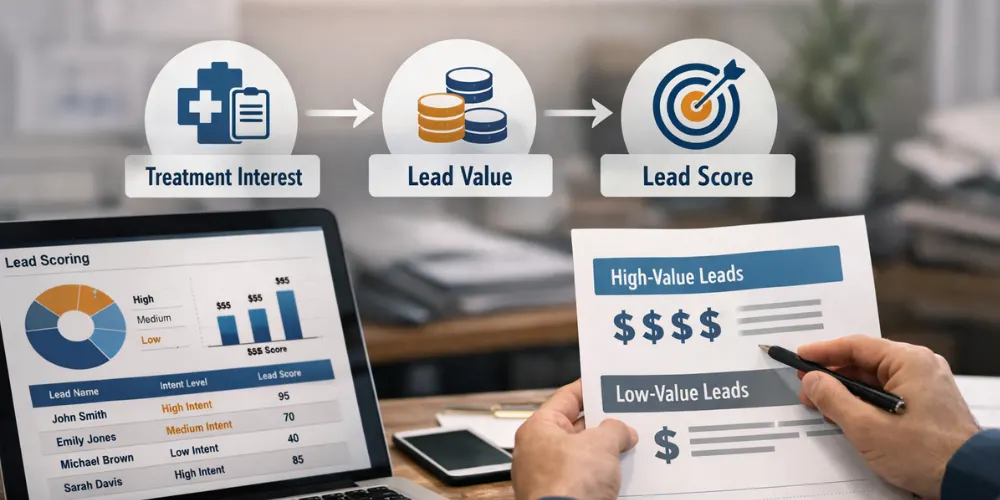
If you’re a dentist investing in marketing, here’s a hard truth: not all leads are equal. Some patients are just browsing, while others are ready to book high-value treatments like implants, Invisalign, or full-mouth rehabilitation.
We have worked with multiple dental practices where the biggest shift in ROI didn’t come from more leads, but from better lead scoring based on treatment intent and treatment value. Once we started prioritizing who to follow up with first, conversion rates jumped dramatically.
Treatment intent is the likelihood that a lead is ready to proceed with a dental procedure.
Think of it like a temperature scale:
You can estimate intent using signals like:
According to industry research from Google’s healthcare insights, high-intent searches (like “near me” or “cost”) convert 2–3x more than informational queries.
Treatment value refers to the potential revenue generated from a specific dental procedure.
If your team spends equal time on all leads, you risk:
To truly maximize outcomes, your practice needs a structured approach to handling inquiries, this is where a strong lead management system becomes critical for organizing and prioritizing incoming patient requests.
Use behavioral and inquiry data:
Examples:
Rank treatments based on revenue potential:
Create a simple formula:
Lead Score = Intent Score × Treatment Value
Example:
The Invisalign lead gets priority, even if both came in at the same time. To improve how these leads convert into actual appointments, many practices also follow proven frameworks from this detailed guide on turning inquiries into booked patients.
Use tools like:
You can automatically:
Large clinics and multi-location setups especially benefit from structured workflows similar to those discussed in this guide on handling patient inquiries across multiple clinics.
In one dental clinic we worked with, the front desk followed a “first come, first served” approach.
We introduced:
The biggest shift? They stopped treating every lead the same.
A major contributor to this success was reducing missed opportunities, something you can explore further in this breakdown on fixing missed patient opportunities in dental practices.
Treating All Leads Equally
Not every inquiry deserves the same urgency.
Ignoring Intent Signals
A “cost” query is far more valuable than a general question.
No Follow-Up Prioritization
Delays kill conversions, especially for high-intent leads. In fact, response timing plays a crucial role, as explained in this guide on ideal response times for dental inquiries.
Over-Automation Without Context
Automation helps, but human judgment still matters in final decisions.
Use Call Scripts Based on Intent
Train your team to handle:
For long-term conversions, implementing a structured follow-up plan like this patient follow-up strategy for dental leads can significantly improve outcomes.
Personalize Follow-Ups
Mention:
This builds trust instantly.
Track ROI by Treatment Type
Don’t just track leads, track revenue per lead category.
Dental marketing is getting more expensive. Running more ads isn’t always the answer.
Better lead prioritization = better ROI.
When you align treatment intent with treatment value, you:
If you want more high-value cases, stop chasing more leads, and start scoring smarter, By focusing on treatment intent and treatment value, you ensure your team spends time where it matters most.
The result? More implants. More Invisalign. More revenue, without burning your budget.
What is treatment intent in dental marketing?
Treatment intent is the likelihood that a patient is ready to proceed with a dental procedure, based on their behavior, search queries, and inquiry details.
How do you measure treatment value?
Treatment value is measured by the potential revenue of a procedure, with high-ticket treatments like implants and Invisalign scoring higher than basic services.
Why is lead scoring important for dentists?
Lead scoring helps prioritize high-quality leads, ensuring faster follow-ups and better conversion rates without increasing marketing spend.
How can I identify high-intent leads?
Look for signals like “cost,” “near me,” or booking requests, as well as behavior like repeated visits to treatment pages.
What tools can help with lead scoring?
CRM systems, call tracking tools, and smart forms can help automate scoring based on treatment intent and treatment value.



October 7, 2026
5 min
Missed-call text-back vs. AI receptionist for dental practices: what each handles, when each wins, and which recovers more booked appointments.

October 7, 2026
7 min
AI follow-up helps cosmetic dental practices respond faster, reduce no-shows, and convert more high-intent veneer and Invisalign leads into booked consultations.

September 30, 2026
8 min
Slow lead follow-up can silently drain your dental marketing budget. See where enquiries fall through the cracks and how faster response recovers lost patient value.
Sign Up Now & Someone from Our Team Will Be in Touch Shortly!
Use the form below to send us a message, and we’ll get back to you as soon as we can.
.webp)
Track every marketing dollar and optimize patient conversions with ConvertLens. Gain valuable insights from your campaigns, ensuring you never miss a potential patient. Maximize ROI and grow your practice effortlessly.
-p-500.webp)