October 7, 2026
5 min
Missed-call text-back vs. AI receptionist for dental practices: what each handles, when each wins, and which recovers more booked appointments.
July 16, 2026
9 min
Discover how automated dental marketing reporting saves time, centralizes marketing data, reduces errors, and helps dental practices make smarter growth decisions.

Does keeping track of your dental marketing performance feel more time-consuming every month?
As your practice grows, so does the amount of data you need to monitor. Website traffic, Google Ads, SEO rankings, phone calls, online bookings, reviews, and patient inquiries all live across different platforms. Pulling everything together manually can quickly turn into hours of spreadsheets and reporting.
That's where automated dental marketing reporting saves hours!
Do you know? Dental practices that automate their marketing reporting can save up to 10 to 20 hours of manual reporting every week, giving their teams more time to focus on growth instead of spreadsheets.
Instead of spending valuable time collecting numbers, automation brings your key marketing metrics into one place, helping you track what's working, spot problems sooner, and make better decisions with confidence. While your reports update in the background, you can spend more time growing your practice and serving patients. Implementing dashboard automation further reduces manual work by automatically consolidating reporting across multiple marketing channels.
In this guide, we'll explain what automated dental marketing reporting is, how it works, why it matters, and how you can set it up to save time while making smarter marketing decisions.
Automated dental marketing reporting is exactly what it sounds like. Instead of manually logging into different marketing platforms every week or month, the software automatically collects your marketing data, organizes it into a clear report, and delivers it on a schedule you choose.
Once it's set up, the process runs in the background with little to no manual work.
Here's what gets automated:
The software automatically pulls fresh data from all your marketing channels, including Google Analytics, Google Ads, SEO tools, social media platforms, call tracking software, and your Google Business Profile. There's no need to download spreadsheets or copy numbers between platforms.
All of your key marketing metrics are organized into one easy-to-read report. Instead of jumping between multiple dashboards, you can quickly see website traffic, leads, phone calls, appointment requests, ad performance, keyword rankings, and other important KPIs in one place. Reviewing marketing performance dashboards alongside scheduled reports makes it easier to understand trends and identify opportunities faster.
Many modern reporting platforms also use AI to explain what the numbers actually mean. Rather than showing pages of charts, they highlight what's improving, what's declining, and where your marketing deserves the most attention.
Reports can be sent automatically every week or every month to you, your practice manager, or your marketing agency. Everyone stays informed without anyone having to build reports manually.
The difference compared to manual reporting is significant. Instead of spending hours collecting data from different platforms and formatting spreadsheets, your reports are always updated and ready to review. That gives you more time to focus on making better marketing decisions instead of preparing reports.
It's also important to understand that automated reports are different from live marketing dashboards. A dashboard lets you log in and check your data whenever you want. An automated report delivers the most important insights directly to your inbox, making it much easier to review performance regularly without digging through multiple platforms.
Marketing reporting is one of those tasks that quietly eats into your team's time every month. Pulling data from your practice management software, Google Ads, Google Analytics, review platforms, and other marketing tools, then combining everything into one report, can easily take several hours.
The problem is that it never ends. The same process repeats every month for as long as your practice continues marketing.
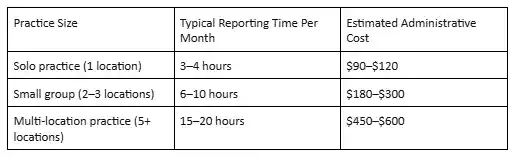
*The data is Based on an average administrative cost of approximately $30 per hour.
These reports are usually prepared by your office manager or another trusted team member. Every hour spent building reports is time that could be spent improving scheduling, supporting treatment acceptance, or delivering a better patient experience.
Once your marketing platforms are connected, automated reporting does the work for you. Reports are generated in minutes, giving your team valuable time back every month.
Many dentists don't stop investing in marketing because the results are poor. They stop because they can't clearly see what's working. When reports are delayed or created manually, it's easy to question whether your marketing investment is paying off. Whereas automated reporting removes that uncertainty by delivering accurate, up-to-date reports on a consistent schedule. Instead of guessing, you always know how your campaigns are performing and can better understand your overall marketing ROI.
There is no doubt that manual reporting also increases the risk of mistakes. Incorrect date ranges, outdated screenshots, or missing data can make it difficult to trust the numbers. Automated reports pull data directly from your marketing platforms using the same reporting periods every time. That means with this, you can generate more accurate reports, consistent formatting, and reliable data, which you can confidently use to make marketing decisions.
A marketing report is only as good as the data behind it. Every platform tells a different part of the story, and when you bring them together, you get a much clearer picture of what's actually attracting new patients, generating revenue, and helping your practice grow.
Your practice management system is where the numbers that matter most live. It shows what actually happens after a patient books an appointment, including new patients, completed treatments, production, collections, and treatment acceptance. Every marketing effort should eventually connect back to these numbers because they reflect real practice growth, not just marketing activity.
Google Ads shows how your paid campaigns are performing. It helps you see where your advertising budget is going, how many leads your campaigns generate, what each booked appointment actually costs, and which keywords are bringing in the best results. This makes it much easier to invest with confidence in the campaigns that are working and improve or pause the ones that aren't. Tracking the right marketing KPIs alongside your advertising data helps you evaluate campaign performance more effectively.
Your Google Business Profile shows how visible your practice is in local search. It tracks profile views, phone calls, website clicks, direction requests, and the other actions people take before they ever contact your office. Since many patients choose a dentist directly from Google Search or Google Maps, these numbers give you a clear picture of how well your practice is reaching local families.
Website analytics shows what visitors actually do after they land on your practice's website. It tells you where they came from, which pages they spend the most time on, and whether they book an appointment, fill out a contact form, or leave without taking action. These insights help you identify the pages that are turning visitors into patients and the ones that need a little more attention.
Google Search Console shows how people are finding your website through Google in the first place. It reports the search terms they're using, how often your pages show up in results, how many people click through, and roughly where you rank. Paired with your website analytics, it gives you a much fuller picture of your SEO performance and where the untapped opportunities are.
Review and recall platforms show how well your practice keeps patients engaged after that first visit. They track new reviews, patient satisfaction, your online reputation, and how many existing patients come back through your recall efforts. Since keeping a patient you already have is usually worth more than finding a new one, these numbers deserve just as much attention as your new-patient growth.
Under the surface, every automated dental marketing reporting workflow follows the same four simple steps.
You link each system once, including your PMS, Google Ads account, Google Business Profile, and website analytics, through a secure, official connection. It's the same "sign in and authorize" process you already use for most online tools. If you manage more than one location, you'll also assign each data source to the correct practice.
A single-location practice can usually complete this setup in under an hour, while a multi-location group may need an afternoon. Good reporting platforms also keep these connections active automatically, refreshing access before it expires so your reports continue running without interruption.
Choose how often you want to receive your reports. The right schedule depends on how actively your marketing is being managed.
Once the schedule is set, reports are built and delivered automatically, whether anyone remembers to check or not.
When a report is generated, the raw numbers should be supported by a short written summary explaining what changed, why it matters, and what it likely means. This step is often more valuable than the data itself. Most practice owners don't study every chart or table. They read the summary first.
For example, "New patient bookings from Google Business Profile increased by 12% this month, mainly driven by implant-related searches. " That tells the story far better than a spreadsheet full of numbers ever could.
The completed report should arrive where you'll actually see it, usually your inbox or a shared inbox your office manager checks regularly, instead of sitting inside a dashboard you have to remember to log into. There's no password to find, no report to generate, and no manual work involved. You simply open the email, review the highlights, check the key numbers, and get back to your day.
That's the entire process. Connect your systems once, choose your reporting schedule once, and every report after that is generated and delivered automatically.
Marketing reports shouldn't feel like another full-time job. With ConvertLens, you can stop chasing numbers across different platforms and start seeing everything in one place.
Built specifically for dental practices, ConvertLens automatically pulls together the marketing data that matters most, from your website, Google Ads, Google Business Profile, and practice management system. Instead of spending hours building reports manually, you'll receive clear, easy-to-understand insights through a real-time performance dashboard that shows exactly what's bringing in new patients, appointments, and revenue.
Whether you're managing one location or several, ConvertLens helps you spend less time reporting and more time making better marketing decisions with confidence.
Ready to make dental marketing reporting effortless? Contact us today and see everything that matters in one place.



October 7, 2026
5 min
Missed-call text-back vs. AI receptionist for dental practices: what each handles, when each wins, and which recovers more booked appointments.

October 7, 2026
7 min
AI follow-up helps cosmetic dental practices respond faster, reduce no-shows, and convert more high-intent veneer and Invisalign leads into booked consultations.

September 30, 2026
8 min
Slow lead follow-up can silently drain your dental marketing budget. See where enquiries fall through the cracks and how faster response recovers lost patient value.
Sign Up Now & Someone from Our Team Will Be in Touch Shortly!
Use the form below to send us a message, and we’ll get back to you as soon as we can.
.webp)
Track every marketing dollar and optimize patient conversions with ConvertLens. Gain valuable insights from your campaigns, ensuring you never miss a potential patient. Maximize ROI and grow your practice effortlessly.
-p-500.webp)