September 30, 2026
8 min
Slow lead follow-up can silently drain your dental marketing budget. See where enquiries fall through the cracks and how faster response recovers lost patient value.
May 15, 2026
11 min
Discover how modern recall systems help dentists improve retention, reduce missed appointments, and keep patients returning consistently.

They say, “it’s easier to keep a patient chair filled than constantly chase a new one.” In today’s competitive dental market, that couldn’t be more true. Many practices spend heavily on SEO, Google Ads, social media, and new patient campaigns, but the real growth often hides in something far less flashy — bringing existing patients back consistently.
A patient who returns every six months for hygiene visits, follows through with treatment plans, and trusts your practice long-term is far more valuable than a one-time appointment. Yet many dental clinics still lose patients quietly in the background because of weak follow-up systems, missed recalls, inconsistent reminders, or outdated communication methods.
The truth is, even the best marketing can become a leaky bucket if your retention process is not working properly. Patients are busy. They forget appointments, postpone treatments, switch providers after moving, or simply disappear when communication fades. That is where a strong dental recall system becomes one of the most powerful tools for practice growth.
Modern recall systems are no longer just reminder postcards or front-desk phone calls scribbled between appointments. Today’s leading dental practices use automated recalls, personalised text reminders, reactivation campaigns, online booking links, and patient segmentation strategies to keep schedules full and relationships strong without overwhelming the team.
So what actually keeps dental patients coming back in 2026? Which recall strategies genuinely reduce no-shows, improve rebooking rates, and strengthen long-term loyalty?
In this guide, we’ll explore the recall systems, patient communication strategies, and retention techniques that help modern dental practices keep schedules full, patients engaged, and relationships lasting far beyond the first appointment.
A dental recall system is a structured process that practices use to remind, schedule, and re-engage their patients who are due for routine dental care. This usually includes six-month hygiene appointments, periodontal maintenance visits, annual exams, follow-up treatments, and preventive check-ups designed to keep patients returning consistently.
At its core, a recall system helps practices stay connected with patients even after they leave the clinic. Instead of relying on patients to remember when they are due for their next appointment, the practice proactively reaches out through reminders, follow-ups, emails, text messages, phone calls, or automated notifications.
An effective recall system creates a reliable patient communication journey with:
Many practices also improve retention by combining recalls with a structured dental patient communication platform that centralises follow-ups, reminders, and patient interactions in one place.
This way, these recall systems for dentists keep patients engaged with their oral health while helping the practice maintain stronger retention, healthier schedules, and more predictable recurring revenue.
Besides helping patients stay consistent with their oral health, dental recall systems are also one of the most important drivers of long-term practice growth and retention. Here are some of the biggest reasons why modern dental practices are investing more heavily in structured recall strategies:
1) Higher Patient Lifetime Value: Patients who return regularly for hygiene visits, exams, and follow-up care are far more likely to accept restorative and cosmetic treatments over time. Strong recall systems help increase the long-term value of every patient relationship.
2) Reduced Dependence on Constant New Patient Marketing: Acquiring new dental patients through SEO, Google Ads, or social media campaigns continues to become more expensive. Practices with better retention rely less on constantly replacing inactive patients. Many clinics now combine retention strategies with a stronger new patient growth framework to create more predictable practice growth.
3) More Predictable Revenue: Consistent recall appointments create healthier hygiene schedules and more stable recurring production. This helps practices reduce unexpected gaps caused by cancellations, no-shows, or inactive patients.
4) Stronger Patient Loyalty and Referrals: Patients who stay engaged with a practice are more likely to leave positive reviews, refer friends and family, and continue treatment plans without interruption.
5) Better Schedule Efficiency: Pre-scheduled recall appointments help practices maintain fuller calendars and reduce last-minute scheduling pressure on front desk teams.
6) Improved Preventive Care Compliance: Effective recall systems encourage patients to return before small oral health issues become larger and more expensive treatment cases.
Consider two dental practices operating in the same city. One constantly spends heavily on attracting new patients but has no structured recall process, causing patients to quietly disappear after a single visit. The other practice uses automated reminders, reactivation campaigns, and pre-scheduled hygiene appointments to consistently retain patients year after year.
The second practice not only improves patient loyalty and recurring revenue but also reduces its dependence on expensive new patient acquisition campaigns over time.
Before building a successful dental recall system, it’s important to understand that not every patient should be managed the same way. Different recall groups require different communication styles, different follow-up strategies, and different levels of urgency.
These are patients who leave the practice with their next hygiene visit, examination, or maintenance appointment already scheduled. This is considered the gold standard of patient retention because pre-appointed patients are far more likely to return consistently compared to patients contacted later.
In many practices, recall rates can increase significantly when patients book before leaving the clinic rather than waiting for future reminders.
For this group, the recall system mainly functions as a confirmation and reminder process. The goal is simple: make sure patients attend the appointment they are already committed to.
Typical communication for appointed patients includes:
These are patients who never pre-booked their next visit, cancelled without rescheduling, or slowly disappeared from the active patient list over time.
This group requires a far more proactive recall strategy. The longer patients stay inactive, the more likely they are to delay treatment, ignore preventive care, or eventually choose another dental practice altogether.
For overdue patients, the recall system becomes a reactivation process focused on rebuilding engagement and encouraging patients to return before they mentally disconnect from the practice.
Typical strategies for overdue patients include the following:
Many dental practices apply the exact same recall strategy to every patient. That is often where retention problems begin.
Pre-appointed patients usually need simple reminders and scheduling support. Overdue patients need stronger follow-up, better personalization, and more consistent outreach.
Practices that separate these two groups and build different recall workflows for each typically achieve better retention rates, stronger hygiene schedules, and more predictable recurring revenue over time.
Before you can fix your recall system, you need to understand why patients lapse. "They just forgot" is too simple, and it leads to solutions that are also too simple. Here's what actually drives attrition:
Each root cause requires a different solution. Scheduling friction calls for a simpler booking process. Cost concerns need clearer communication around treatment value and preventive care benefits. Forgettable patient experiences require more personalised interactions and follow-ups. Lack of urgency can often be improved through better patient education built into every recall communication touchpoint.
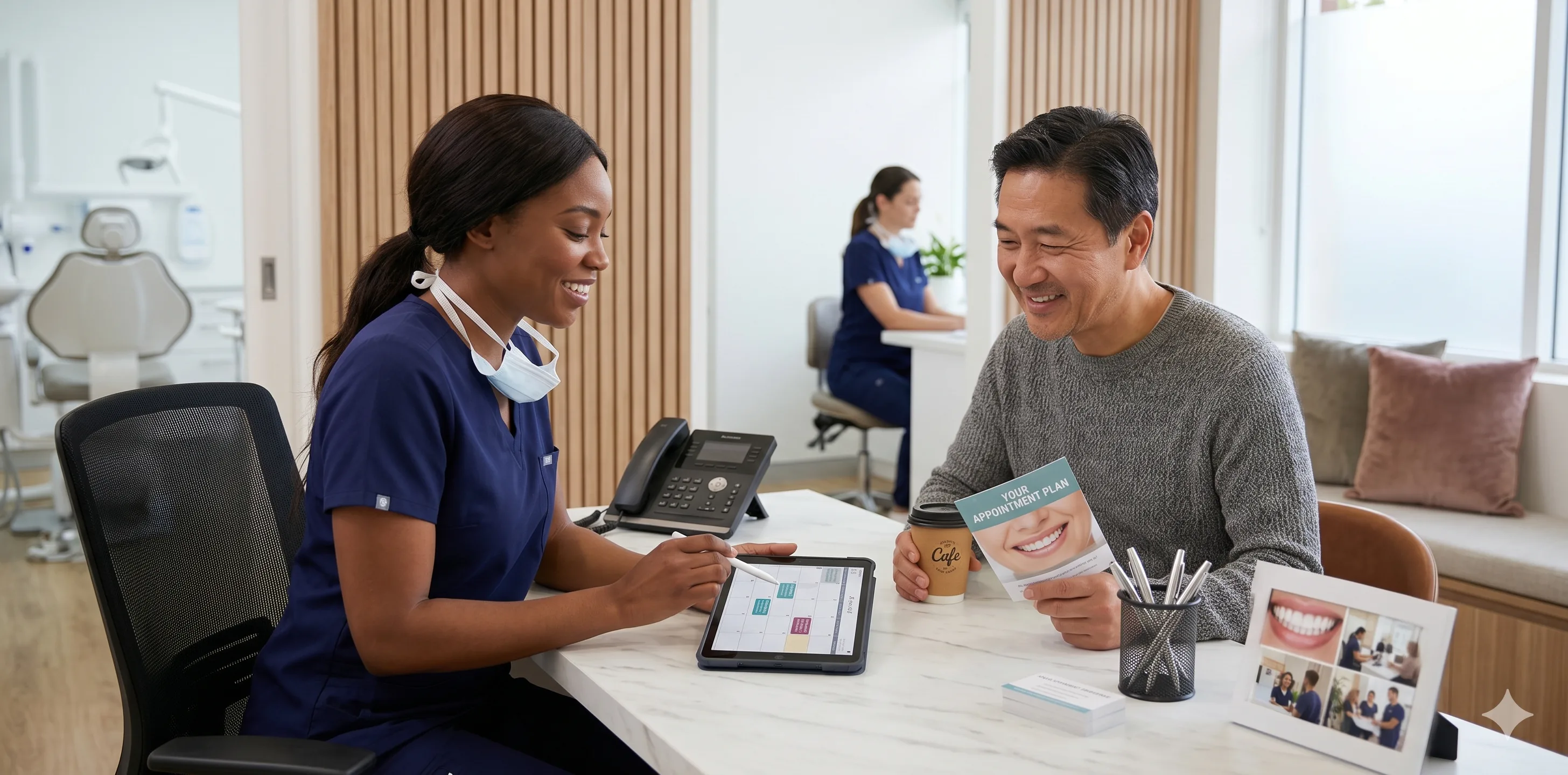
An effective dental recall system is not built around a single reminder message or an occasional follow-up call. High-retention practices use structured processes designed to keep patients engaged, reduce missed appointments, and encourage long-term consistency with preventive care.
Here are the five core pillars that form the foundation of a successful dental recall system.
One of the simplest and highest-impact retention strategies is scheduling the patient’s next appointment before they leave the clinic.
Patients who pre-book hygiene visits or examinations are significantly more likely to return consistently compared to patients asked to “call back later.” In many practices, pre-appointed patients achieve much higher recall retention rates because the commitment has already been made.
To make pre-appointments more effective:
Strong recall systems begin before the patient even walks out the door.
Successful recall systems do not rely on a single reminder email or postcard. Modern dental practices use multiple communication channels to improve confirmation rates and reduce no-shows.
Patient communication preferences also matter. Younger patients often respond best to SMS reminders, while older patient groups may still prefer phone calls.
Not every patient stays consistent with recall appointments. Some cancel and never reschedule, while others quietly disappear from the active patient list over time.
Overdue recall patients require a separate reactivation strategy focused on rebuilding engagement.
One of the biggest recall mistakes practices make is sounding overly transactional or overly urgent. Patients respond better to warm, supportive communication that feels helpful rather than pressuring.
Recall compliance isn't just a scheduling problem — it's a patient education problem. Patients who understand why their six-month visit matters show up at significantly higher rates than those who see it as an arbitrary tradition.
Your recall messaging should carry brief, compelling reminders of the clinical importance rather than long lectures. Just enough to reframe the visit from "a chore the dentist wants me to do" to "something I'm doing for myself."
Examples that work:
Weave patient education into recall emails, end-of-appointment conversations, social media posts, and any patient newsletter or follow-up communication.
You cannot improve a dental recall system until you actively measure its performance. If your practice is unaware of its actual recall rates, patient attrition levels, or overdue patient conversion rates, it becomes almost impossible to identify where patients are dropping off or which parts of the system need improvement.
Many growing practices use advanced lead tracking and follow-up systems to monitor patient communication, appointment conversions, and retention performance more accurately.
You do not always need brand-new software to improve your dental recall system. In many cases, practices already have access to tools capable of improving patient retention but simply are not using them effectively.
The key is understanding which technologies genuinely help reduce patient drop-off, improve rebooking rates, and create smoother recall communication workflows.
Whether your practice uses Dentrix, Eaglesoft, Open Dental, or another platform, most practice management systems already include recall and patient communication features such as:
Many practices only use a small percentage of these capabilities. Before investing in additional platforms, it is worth fully optimizing the tools already built into your existing software.
Dedicated dental communication platforms help automate and improve recall outreach across multiple channels. These systems are designed specifically to support patient retention and scheduling consistency.
Popular features often include:
Practices looking to improve retention and automate patient engagement often benefit from implementing a more integrated CRM solution for dental practices that supports recall communication and patient follow-ups.
While these tools involve an additional monthly investment, practices with underperforming recall systems often see strong ROI through improved hygiene retention and fewer empty appointment slots.
One of the biggest barriers to recall compliance is scheduling friction. Many patients delay appointments simply because they do not want to call during working hours.
Online self-scheduling allows patients to book hygiene visits or exams directly from a reminder email or text message, which makes the process significantly easier and faster.
Practices offering online scheduling often see:
Basic one-way reminders are useful, but two-way texting creates a much stronger patient communication experience.
When patients can quickly respond to a reminder with messages like
the chances of retaining that appointment increase significantly.
Without two-way communication, patients often end up in voicemail queues, delay rebooking, or simply never follow through.
Even strong dental recall systems run into difficult patient situations. The difference is that high-retention practices handle these moments with structured follow-up instead of letting patients quietly disappear from the schedule.
This is one of the most common recall failure points. The success rate for this group is low because many patients never call within the recommended recall window.
What helps is making a gentle second attempt before the patient leaves: “Can I at least add you to our reminder list so we can reach out when it’s close to your six-month visit?” Then ensure the patient is placed into a proactive outreach sequence rather than passive recall alone, followed by a personal call within 30 days while intent is still fresh.
When a patient cancels, always attempt to reschedule before ending the conversation. If that does not happen, follow up with a same-day callback attempt, followed by a text message later that week offering a specific appointment time such as "We have availability Thursday at 10am. Would that work for you?”
If there is no response after seven days, the patient should move into the overdue recall sequence.
When a patient returns after being away for 12 months or longer, treat it as a new relationship rather than simply continuing where things left off.
Welcome them warmly without guilt or lectures. Rebuild the connection, reintroduce them into preventive care, and immediately place them back into a strong pre-appointment cycle.
Patients who return after lapsing often become some of the most loyal long-term patients once retained properly.
Year-end is one of the strongest recall outreach periods for many dental practices. Patients with unused annual dental benefits are often highly motivated to schedule appointments during the final quarter of the year.
Build a dedicated outreach campaign starting around September targeting patients with unused benefits. This is one of the few situations where urgency-based messaging tends to work particularly well in dentistry.
Automation helps handle volume. It does not replace personal connection. Your highest-risk overdue patients often need a real human reaching out, not another automated reminder text or email.
If you do not know your recall rate, overdue conversion rate, or patient attrition numbers, you cannot improve them. Consistent monthly reporting is essential for understanding where patients are dropping off and what parts of the system need attention.
A healthy 28-year-old due for a routine cleaning needs different messaging than a 55-year-old on a periodontal maintenance schedule. Recall communication should feel relevant to the patient’s situation, treatment history, and level of urgency.
Recall is not just a scheduling task. It is also a clinical recommendation. When dentists and hygienists actively reinforce the importance of future visits, retention rates typically improve.
Many practices stop outreach after one or two attempts. In reality, overdue patients often require multiple follow-ups before responding. Persistence, when done warmly and consistently, usually performs far better than aggressive or guilt-driven communication.



September 30, 2026
8 min
Slow lead follow-up can silently drain your dental marketing budget. See where enquiries fall through the cracks and how faster response recovers lost patient value.

September 30, 2026
10 min
Dental AI agents can screen patient inquiries by treatment need, urgency, insurance, and location, handing your front desk only booking-ready leads.

September 27, 2026
8 min
See the 10 key KPIs dental practices should track for AI receptionists, including call resolution, booking rates, cost per appointment, and ROI.
Sign Up Now & Someone from Our Team Will Be in Touch Shortly!
Use the form below to send us a message, and we’ll get back to you as soon as we can.
.webp)
Track every marketing dollar and optimize patient conversions with ConvertLens. Gain valuable insights from your campaigns, ensuring you never miss a potential patient. Maximize ROI and grow your practice effortlessly.
-p-500.webp)