October 7, 2026
5 min
Missed-call text-back vs. AI receptionist for dental practices: what each handles, when each wins, and which recovers more booked appointments.
May 29, 2026
11 min
Learn how DSOs can use waitlist management strategies, automation, and scheduling workflows to fill cancellations, reduce downtime, and improve patient access.
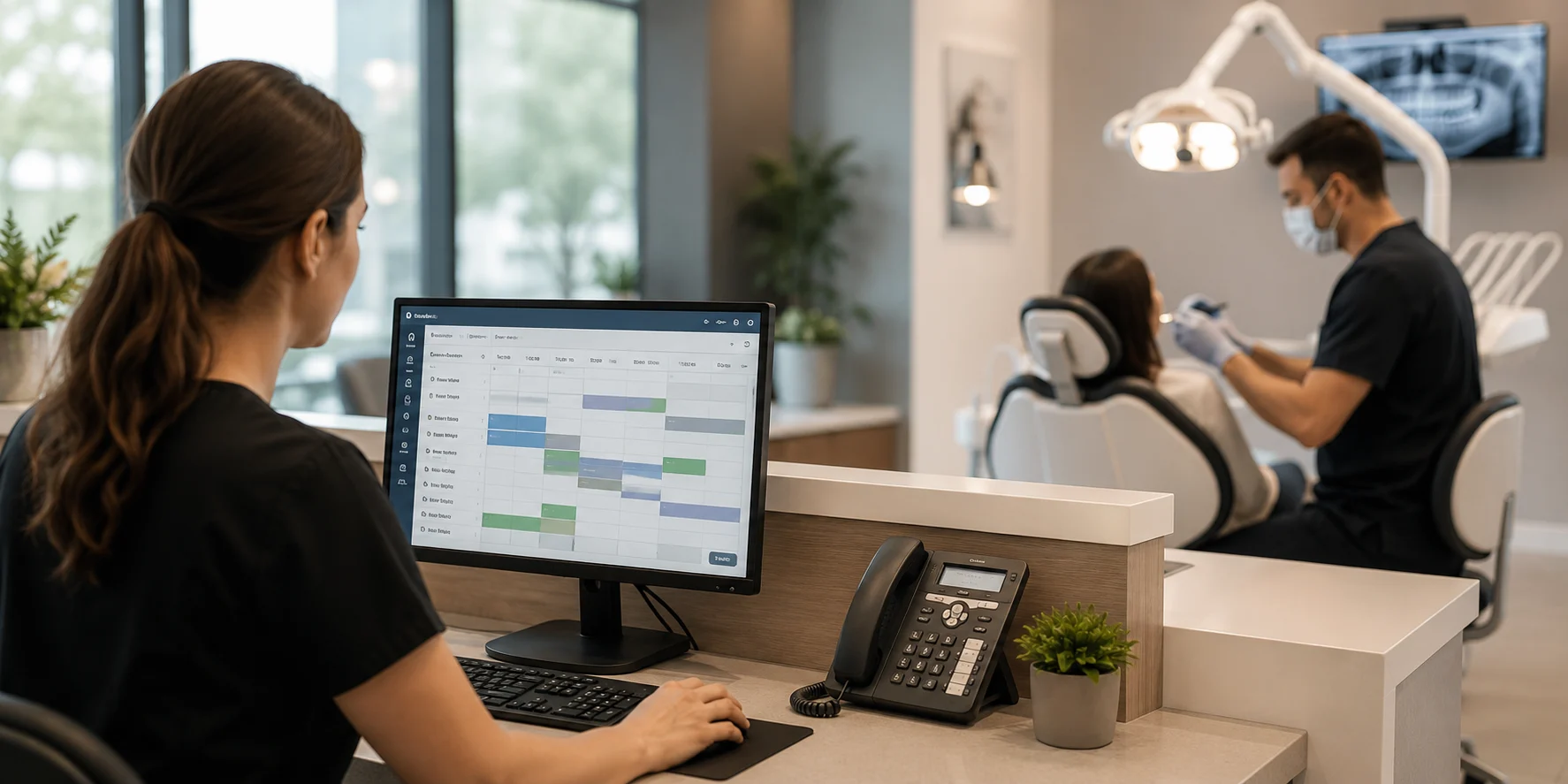
Empty chairs don’t just hurt daily production, they quietly drain momentum from the entire organisation. For DSOs managing multiple locations, even a handful of last-minute cancellations or unfilled appointment slots across practices can quickly turn into thousands in lost revenue every month. And in most cases, the issue isn’t patient demand. It’s the lack of a structured waitlist system that can move fast when schedules suddenly open up.
The reality is simple: patients are often willing to come in sooner if the opportunity is offered clearly and quickly. Practices that actively manage cancellations, waitlists, and same-day scheduling keep chairs filled more consistently, improve provider productivity, and create a better patient experience at the same time.
If your DSO is looking to reduce downtime, recover lost production, and improve scheduling efficiency across locations, this guide breaks down exactly how effective waitlist management helps keep every chair filled.
Revenue Loss From Empty Chairs
Before we talk about strategy, it’s important to understand how expensive poor waitlist management really is. The average dental chair generates somewhere between $350 and $700 per hour depending on procedure type, payer mix, and location. A single empty hygiene slot can mean $150–$250 in lost production, while an unused restorative appointment may cost $400–$800 or more. Across a DSO with multiple locations, even a few unfilled appointments per day can quietly translate into millions in lost annual revenue — not because demand is missing, but because the system for capturing it is failing.
Patient Churn and Lost Lifetime Value
The financial impact goes far beyond a missed appointment. When patients experience long wait times and poor communication, many disengage entirely. Research around dental patient behaviour consistently shows that patients waiting several weeks for appointments without proactive updates are significantly more likely to switch providers. For DSOs, losing a patient with a lifetime value of $8,000–$15,000 because they felt overlooked becomes a far bigger problem than a single cancelled slot. Organizations that regularly monitor long-term patient loyalty metrics are often better positioned to identify these risks before they affect growth.
Front Desk Burnout and Operational Pressure
Reactive scheduling creates constant pressure for front desk teams. Scrambling to fill same-day cancellations, calling outdated waitlists, and managing frustrated patients turns scheduling into daily firefighting. Over time, this lowers productivity, increases staff burnout, and contributes to higher turnover in scheduling roles. Once experienced coordinators leave, maintaining an efficient waitlist system becomes even harder.
Reputation Damage Across Multiple Locations
Patients rarely keep a poor booking experience to themselves. Many DSOs use structured patient experience surveys to identify scheduling frustrations before they become public complaints. If someone sits on a waitlist for weeks without hearing back, chances are it ends up in a Google review, local Facebook group, or Reddit thread. And once comments like “nobody ever called me back” or “I gave up and booked elsewhere” start appearing publicly, trust begins slipping through the cracks.
For DSOs, that damage doesn’t stay contained to one clinic either. Patients often view every location under the same brand as part of the same experience. One poorly managed practice can quickly put a dent in the reputation of the wider group — especially in competitive markets where patients have plenty of other options just down the road.
That's why Poor healthcare wait times directly affect revenue, retention, staff performance, and brand reputation. For growing DSOs, effective waitlist management is a core part of keeping chairs filled, protecting patient relationships, and sustaining long-term practice growth.
The definition of “acceptable” waiting time has changed dramatically over the past five years.
What Patients Expect Today
Consumer habits shaped by same-day delivery, instant appointment booking, and on-demand services have completely changed what patients now consider reasonable. In dentistry, most patients expect to be seen within one to two weeks for a routine appointment. For urgent or painful issues, that expectation often drops to just 24–48 hours. When the reality falls far outside those expectations, frustration begins long before the patient ever walks into the practice.
Benchmark Data on Acceptable Waiting Times
Industry benchmarks from dental operations research suggest that the third-next-available appointment — a widely used healthcare access metric — should ideally sit within 10 to 14 days for hygiene visits and new patient exams. Practices consistently running at three to four weeks or longer are typically dealing with a genuine access issue. For DSOs managing high patient volumes across multiple locations, this becomes even more important because delays scale quickly as demand increases.
The Gap Between Expectations and Reality
In many practices, the gap between what patients expect and what they experience is significant. Routine hygiene appointments are often booked six to eight weeks ahead. New patients, who usually have the highest dental anxiety and the lowest loyalty to a specific provider, frequently wait the longest while receiving the least communication. The outcome is predictable: patients cancel, book elsewhere online, or arrive already frustrated and anxious before treatment even begins. Strong digital self-service tools can help patients access appointments faster and reduce scheduling friction.
How Waiting Time Affects Patient Lifetime Value
This is where waiting time becomes more than just an operational issue. Patients who experience smooth scheduling, reasonable wait times, and proactive communication are far more likely to return regularly, accept comprehensive treatment plans, leave positive reviews, and recommend the practice to others. Patients who feel forgotten on a waitlist often complete only urgent treatment before quietly disappearing. Over time, the difference in patient lifetime value between those two experiences can be substantial.
Overbooking gets a bad rap in dentistry because most practices handle it by gut instinct instead of real scheduling data. But when it’s done strategically, it can become one of the strongest tools for reducing empty chair time and improving patient access.
When and how to overbook safely: Overbooking should only apply to appointment types and time slots with a proven pattern of no-shows or late cancellations. If your Monday morning hygiene appointments consistently run with high no-show rates, slightly overbooking those specific slots is smart scheduling, not rolling the dice.
Calculating no-show probability by patient segment: The numbers usually tell a clear story. New patients, long-booked appointments, and certain days or time blocks often carry much higher no-show risk than established recall patients. Breaking this data down properly helps DSOs overbook selectively instead of taking a blanket approach. Similar data-driven strategies are often used when improving appointment attendance rates across multiple locations.
Real-world example. One 12-location DSO identified hygiene slots with a 22% combined no-show and same-day cancellation rate. By carefully overbooking those periods and tightening confirmation workflows, they cut effective slot loss to under 5% within 90 days without creating major scheduling bottlenecks.
The safeguard is simple: always have a backup plan if everybody shows up. With the right scheduling rules and communication protocols in place, controlled overbooking becomes manageable instead of chaotic.
A flat waitlist where every patient sits in the same queue simply doesn’t work well in a busy DSO environment. It treats a patient with severe pain the same as someone booking a routine hygiene visit months in advance. A tiered system creates structure, improves fill rates, and helps practices respond faster to the patients who need care most urgently.
Tier 1 — Clinical Urgency. Patients with pain, broken restorations, swelling, post-op concerns, or time-sensitive treatment needs should be prioritised immediately. These patients should never sit on a waitlist without proactive follow-up or rapid scheduling options.
Tier 2 — New Patients. New patient enquiries carry both strong revenue potential and high drop-off risk. If communication slows or wait times stretch too long, many simply book elsewhere. Giving new patients their own scheduling priority helps reduce leakage. This becomes even more effective when supported by a structured patient enquiry follow-up process that keeps prospective patients engaged.
Tier 3 — Active Recall with Treatment Pending. Existing patients with incomplete treatment plans or overdue recall appointments should stay high on the list. Delays here often mean lost recurring revenue and lower treatment acceptance.
Tier 4 — Routine Recall. Routine hygiene and maintenance appointments may be lower urgency, but they still require regular communication. Patients are far less likely to drift away when they feel the practice is actively keeping them updated.
Tier 5 — Cosmetic and Elective Treatment. Cosmetic consultations and elective procedures are usually more flexible on timing, making them ideal for filling slower periods or last-minute openings.
Automating tier assignment. Most modern practice management systems allow practices to assign custom tags or priority labels. Even simple intake questions like “Is this urgent?” can help front desk teams place patients into the right category immediately.
The key is balance. Patients generally accept longer waits when communication stays clear and consistent. What damages trust isn’t the wait itself — it’s feeling forgotten.
When a cancellation opens up, timing becomes everything. A chair left empty for even a couple of hours becomes much harder to refill, especially in busy dental practices managing multiple providers and packed schedules. Practices with automated waitlist workflows can often refill cancelled appointments within minutes because the system immediately reaches out to patients already waiting for an earlier slot.
How the automated workflow works:
When a cancellation is logged in your practice management software → the system triggers an automated check of the waitlist → filters for patients matching the appointment type, duration, and time preference → sends a simultaneous text message to the top two or three matches: "Good news — a slot just opened! [Date] at [Time] at [Location]. Reply YES to confirm. First to respond gets it."
This approach removes the constant back-and-forth of manual phone calls, improves fill rates significantly, and helps practices recover revenue that would otherwise disappear from last-minute cancellations.
One critical rule: Automate outreach, but escalate to a personal call for patients who have been on the waitlist for more than four weeks. They've waited long enough that a text feels impersonal. A human call from a scheduling team member — "Hi, I'm calling personally because we know you've been waiting and I want to make sure you're taken care of" — converts far better and signals that your practice actually cares.
Your PM system already contains 12–36 months of scheduling data — including no-shows, cancellations, and late arrivals — that many practices never properly analyse. Hidden inside that data are clear patterns showing where open slots are most likely to appear before they actually happen, allowing your team to proactively fill gaps instead of reacting at the last minute.
Universal patterns to look for. Mondays and Fridays usually carry the highest no-show risk. First and last appointments of the day often have elevated cancellation rates. Appointments booked 30+ days in advance tend to cancel more frequently than appointments booked within one to two weeks. School holidays, summer schedules, and festive periods also create predictable seasonal slowdowns.
How to start. Pull a no-show and cancellation report sorted by day of week and time block for the past 12 months. The top recurring trends you identify become your immediate action points — no data analyst required. Instead of waiting for cancellations to happen, build waitlist depth ahead of historically high-cancellation periods and weaker time slots.
This might be the closest thing a DSO has to a hidden revenue switch.
Practices that put one person fully in charge of the waitlist almost always keep chairs fuller than practices where the job gets passed around the front desk. Many growing organizations support these efforts with centralized lead tracking and coordination systems that improve visibility across locations. When the waitlist becomes “everyone’s job,” it usually turns into nobody’s priority.
What the Waitlist Coordinator actually does: Every day, they keep an eye on cancellations, jump on open slots fast, match the right patients to the right openings, send outreach before the chair goes cold, confirm appointments, and keep the waitlist moving instead of letting it collect dust.
Every week, they look for patterns, which providers lose the most time, which locations struggle to fill gaps, and which patients have been sitting too long without movement. Urgent cases get escalated before patients give up and book somewhere else.
Every month, they track the numbers that matter: fill rates, no-show trends, waitlist conversions, and how quickly practices recover from cancellations.
For DSOs with centralized scheduling teams, one strong coordinator can often manage waitlists across multiple locations at once. That means the same follow-up process, the same communication style, and the same playbook running across the entire group instead of every office doing its own thing.
Most DSOs try to pack the schedule wall-to-wall weeks in advance. The smarter move is to leave a little breathing room.
Holding one or two same-day emergency slots at each location gives your team flexibility when cancellations hit and helps you capture high-intent patients who need care now, not three weeks from now. An empty slot at 10 am loses the same money whether it came from a cancellation or an overpacked schedule. The difference is that a same-day emergency patient often walks in ready to move forward with treatment.
How to structure same-day slot management: Keep same-day emergency slots on “hold” in your PM system until 7:00am. If no urgent cases come in overnight, offer those openings first to Tier 1 and Tier 2 waitlist patients through automated text outreach. Any remaining slots by 8:30am can then be released for same-day online booking. This staged approach helps maximize chair utilisation while keeping urgent patient access protected.
The bigger opportunity is what happens after the emergency visit. Patients who get seen quickly when they’re in pain remember it. That’s where long-term loyalty starts. Practices that combine fast emergency access with a strong patient experience often turn same-day emergency visits into long-term restorative, hygiene, and cosmetic treatment relationships.
Your waitlist is a marketing list of patients who have already shown intent to book with your practice. Treat it like one. Patients waiting more than 30 days without an appointment are at far higher risk of drifting elsewhere, which is why passive waiting needs to become active re-engagement.
Structured Reactivation Sequence for Lapsed Waitlist Patients
Start with a personalised text acknowledging the wait and reaffirming your intent to get them scheduled. Three days later, follow up with a short email that includes a direct booking link. If there’s still no response after a week, a brief personal call from the scheduling team often brings the patient back into the pipeline. Consistently applied, this sequence recovers a meaningful percentage of patients who would otherwise be considered lost.
Combine Waitlist and Recall Into One System
The strongest DSO operations no longer manage waitlists and recall lists separately. They use one unified patient communication system organised by urgency, treatment status, and next action. A patient overdue for recall who also has pending treatment should receive one coordinated outreach, not multiple disconnected messages. Less friction creates a smoother patient experience and stronger booking conversion.
The right technology will not fix a broken scheduling process, but it will make a strong one far more efficient. For DSOs managing multiple locations, the goal is simple: faster patient communication, better visibility across schedules, and fewer empty chairs.
Practice Management Software Features That Actually Matter
Your practice management software is the backbone of your waitlist system. At minimum, it should support searchable waitlists, custom patient tags, automated appointment reminders with two-way responses, cancellation tracking, and reporting by provider and time block. Most DSOs already have these tools available inside systems like Dentrix, Eaglesoft, Open Dental, or Curve Dental — they’re just not using the full functionality consistently across locations.
SMS and Patient Communication Platforms
Speed matters when filling cancellations, and SMS remains the fastest communication channel for most patients. Platforms like Weave, NexHealth, Solutionreach, and Lighthouse 360 help automate waitlist outreach, appointment confirmations, recall reminders, and review requests. The biggest advantage is response time. Patients are far more likely to reply to a text within minutes than answer a voicemail hours later.
AI Scheduling Tools and Predictive Insights
Modern scheduling tools are starting to use historical data to predict no-shows, identify high-risk appointment slots, and surface the best waitlist matches automatically. Platforms such as Dental Intelligence can help DSOs spot scheduling patterns that would otherwise go unnoticed. For larger groups, this turns scheduling from reactive guesswork into proactive capacity management. Combined with consistent multi-location performance monitoring, these insights help DSOs maintain operational efficiency as they scale.
Integrations That Make the Biggest Difference
The real efficiency gains happen when systems work together. Online booking connected to Google Business Profile, automated review requests after visits, provider calendar syncing, and centralised communication dashboards all reduce friction for both staff and patients. For DSOs, the key is consistency. If every location uses disconnected tools and workflows, operational efficiency breaks down quickly.



October 7, 2026
5 min
Missed-call text-back vs. AI receptionist for dental practices: what each handles, when each wins, and which recovers more booked appointments.

October 7, 2026
7 min
AI follow-up helps cosmetic dental practices respond faster, reduce no-shows, and convert more high-intent veneer and Invisalign leads into booked consultations.

September 30, 2026
8 min
Slow lead follow-up can silently drain your dental marketing budget. See where enquiries fall through the cracks and how faster response recovers lost patient value.
Sign Up Now & Someone from Our Team Will Be in Touch Shortly!
Use the form below to send us a message, and we’ll get back to you as soon as we can.
.webp)
Track every marketing dollar and optimize patient conversions with ConvertLens. Gain valuable insights from your campaigns, ensuring you never miss a potential patient. Maximize ROI and grow your practice effortlessly.
-p-500.webp)