October 7, 2026
5 min
Missed-call text-back vs. AI receptionist for dental practices: what each handles, when each wins, and which recovers more booked appointments.
February 27, 2026
7 min
Unlock effective strategies for local dental lead generation. Attract more patients with this practical guide tailored for dental practices.
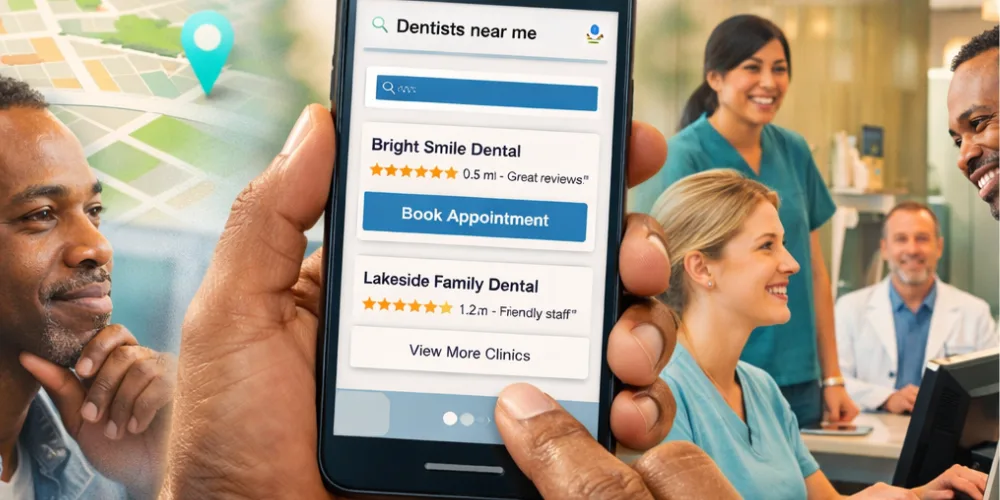
If you run a dental practice and you’re wondering how to get more patients in your area, the kind who actually call and book, you’re in the right place. What follows isn’t theory. It’s a relentlessly practical blueprint for local dental lead generation. We’ll look at which channels work, how to weigh vendors, and how to avoid spending on things that sound good but don’t move the needle. Along the way there are checklists, selection tactics, numbers, and a straight look at how to think about budgets, retention, and actually getting local people to book appointments, not just browse your site.
The term "local dental lead generation" just means attracting people right near you and converting their intent into a call or a booking. If you’re a dentist asking, “Should I pay for these ads, buy this ‘verified’ badge, or hire these folks who promise new patients?" this guide is for you. We’ll help you sift the signal from the noise, compare options (including those shiny Google Local Services Ads), and help you decide what, if anything, is worth it.
If you follow this playbook, here’s what should happen:
Why bother with journey mapping? Because the way people actually look for a dentist is messy: first, they look, then they compare, then they act (maybe). Your SEO and site are hooks at the top; reviews and your Google Business Profile keep you in the running; and bottom-of-funnel stuff (like local services ads) clinches the booking. It’s not magic or a funnel; it’s real behavior.
If you haven’t documented how patients move from search to scheduled appointment, start with a simple patient journey mapping framework so you can identify exactly where interest turns into action, or where it quietly dies.
Local SEO is not a nice-to-have; it’s do-or-die. Make your dental website clean, fast, mobile-happy, and stuffed with the data Google craves: accurate NAP, local schema, and unique pages for each service. If your SEO is weak, you’ll lose to the place down the street that gets it right.
Local Services Ads (LSAs) put you at the top where the action is, with the Google Verified Badge if you pass vetting. Yes, you need to do paperwork (license, insurance, and ID checks), but you pay per real lead, not clicks. That’s why they’re popular among hungry practices.
If you run Google Ads, use keywords anchored in your city/area, call-only campaigns, and social offers with strict geotracking. Test everything: headlines, forms, even the button text. Measure conversion and patient value, not just surface metrics.
Standardize your UTM tags, set up goals in GA4, and wire up call tracking to your CRM. Don’t just count leads; see who books, who shows up, and how often they stay. Use dashboards to compare channels side by side. It’s not just for bragging; it tells you where to put your money and when to walk away.
To use LSAs and show off that Google Verified Badge, you’ll have to get verified: insurance docs, licenses, and sometimes background checks. Don’t cut corners; Google checks. Run it yourself or hire a respected provider. If you don’t keep review volume up, your visibility slumps no matter the channel.
Wire up call tracking (try Liine or Patient Prism if you want automation), tie it into your CRM or PM system, and get a platform that lets you see spend, leads, and booked appointments at a glance. If you know which source brings in high-quality, prequalified leads, that’s where your dollars go next. But don’t confuse volume with profitability. Understanding the difference between revenue and ROI keeps you from pouring money into channels that look busy but quietly underperform. Don’t just chase new; nurture and retain, and watch customer lifetime value grow and jobs booked climb.
Q: Local Services Ads or Google Ads, what’s the difference?
A: LSAs put you at the top, pay per lead, require proof (license, insurance, even background), and can show the verified badge. Google Ads is classic pay-per-click with more flexible targeting, but anyone can run them.
Q: What’s involved in LSA verification?
A: You’ll need to submit licenses, registration, insurance, and likely pass background checks for anyone with a stake in your practice. Do it right or don’t bother—the badge is earned.
Q: Are LSA leads worth it?
A: Most say yes, calls are direct, usually urgent, and if you catch them fast, the book rate can beat other ads. Move them to your CRM fast.
Q: Am I really only paying for results with LSAs?
A: Yes. You pay for booked call/message leads, not every lookie-loo. That’s why smart practices love it.
Q: Handle it myself or hire out?
A: If you love operations and have time, you can do it. Most don’t. Agencies or hybrid setups (agency plus robust lead platform) mean you can scale and retain control.
Q: Do LSAs play nice with everything else?
A: Yes, run LSAs + Google Business Profile + local SEO + a high-converting site for a system that survives algorithm shifts and gets results.
Q: What’s the #1 thing for handling LSA leads?
A: Answer fast; the route leads to your CRM/front desk, and log results for every single lead. The fastest responder wins.
Last thought: There’s no secret: if you do the work, local SEO, a dialed-in Google Business Profile, hungry Local Services Ads, and a CRM-driven follow-up, you’ll win more local patients, waste less money, and book more jobs. Centralized platforms (like ConvertLens) make the grunt work easier, track ROI, shorten response times, automate big chunks of the funnel, and let you lean heavier on “pay for results” channels or scale up in-house. The tools are there. The system works if you work it.



October 7, 2026
5 min
Missed-call text-back vs. AI receptionist for dental practices: what each handles, when each wins, and which recovers more booked appointments.

October 7, 2026
7 min
AI follow-up helps cosmetic dental practices respond faster, reduce no-shows, and convert more high-intent veneer and Invisalign leads into booked consultations.

September 30, 2026
8 min
Slow lead follow-up can silently drain your dental marketing budget. See where enquiries fall through the cracks and how faster response recovers lost patient value.
Sign Up Now & Someone from Our Team Will Be in Touch Shortly!
Use the form below to send us a message, and we’ll get back to you as soon as we can.
.webp)
Track every marketing dollar and optimize patient conversions with ConvertLens. Gain valuable insights from your campaigns, ensuring you never miss a potential patient. Maximize ROI and grow your practice effortlessly.
-p-500.webp)