October 22, 2026
7 min
What to fix before spending more on dental marketing: front desk leaks, website conversion, local SEO, reviews, and patient recall gaps.
July 24, 2026
8 min
Compare AI answering services and human dental front desks to see which delivers better patient experiences, lower costs, and more appointments.

Every unanswered call at a dental practice is a decision, even when no one meant to make one. The patient on the other end either leaves a voicemail nobody returns in time, or hangs up and calls the next practice on the list. Multiply that by the calls that come in during lunch, after 5 p.m., or while your two front-desk staff are already juggling four other patients standing in front of them, and the real question isn't whether you need more phone coverage. It's whether an AI answering service or a human front desk is the better way to provide it.
This isn't a question with one right answer. It depends on call volume, budget, patient mix, and how much your team is already stretched. Here's how the two actually compare, where each wins, and how most practices end up combining both.
A human front desk answers calls, schedules appointments, verifies insurance, handles walk-ins, and manages in-person patient needs — all while switching between tasks in real time. It's flexible and can read tone, de-escalate frustration, and make judgment calls no software can.
An AI answering service (sometimes called an AI receptionist) uses conversational AI to handle incoming calls, texts, and web chat. It can book directly against real-time PMS availability, answer FAQs about hours and insurance, and route urgent calls — all without hold time, and without needing a lunch break.
The two aren't really substitutes for each other. One replaces a task; the other replaces a person. That distinction matters more than most vendor pitches let on.
Most AI answering services for dental practices run $200–$450 a month. A basic human answering service for message-taking alone typically runs $400–$800 a month without actually booking appointments. Adding a full-time front-desk employee costs considerably more once salary, benefits, and onboarding are factored in.
The math is straightforward for most practices: a practice scheduling even a modest number of additional visits a month at typical production value can recover the AI system's cost several times over — before counting the after-hours bookings it also captures that would otherwise be lost entirely.
That said, cost isn't the only variable. A practice with low call volume and a stable, well-staffed front desk may not see enough marginal benefit to justify the switch. This is where tracking front desk performance through conversion data becomes useful — you can see whether calls are actually converting to booked appointments before deciding to change anything.
In practice, the winning approach for most dental offices isn't AI or human — it's AI for volume and coverage, human for everything requiring judgment. AI answers the phone when the desk is slammed or the office is closed, books routine appointments, and answers FAQs. Complex insurance questions, anxious patients, and clinical triage route straight to a person.
This hybrid model also solves a problem neither option solves alone: after-hours coverage without the cost of a night shift, paired with the empathy and judgment a human provides during the day. Many practices apply the same logic to their after-hours patient communication with AI chatbots, using automation strictly to bridge the gaps human staff can't cover.
A few questions can clarify which model fits:
The choice between AI and human front desk coverage isn't really either-or. It's about matching the right tool to the right call. AI absorbs volume, covers after-hours gaps, and reduces burnout-driven turnover. Humans handle nuance, empathy, and judgment calls that build long-term patient relationships. Practices that combine both — with clear rules for when a call gets escalated — tend to convert more callers into booked, retained patients than practices relying on either option alone.
If you're trying to figure out where your practice is actually losing callers before choosing a fix, Convertlens's lead management tools can show you exactly where calls are falling through, so you invest in the right coverage first.
For most practices, no — it's designed to absorb overflow and after-hours calls, not eliminate the role. The practices seeing the best results treat AI as support for existing staff, freeing them to focus on in-person patients rather than phone volume.
Track call answer rate, the percentage of appointments booked without escalation, and patient feedback on the experience. If escalations are frequent or patients report confusion, the system likely needs better configuration, not replacement.
Yes — before implementation, confirm the vendor provides a Business Associate Agreement (BAA) and documentation on how it handles sensitive patient information during calls. Any vendor unable to show this clearly should be a dealbreaker.
A well-configured system escalates immediately to a live staff member or on-call provider, particularly for anything flagged as urgent or clinical. Always maintain a clear human backup path.



October 22, 2026
7 min
What to fix before spending more on dental marketing: front desk leaks, website conversion, local SEO, reviews, and patient recall gaps.

October 22, 2026
10 min
A guide to nurturing dental price shoppers: why they go quiet, how to explain costs clearly, and how to turn enquiries into booked consultations.
October 17, 2026
8 min
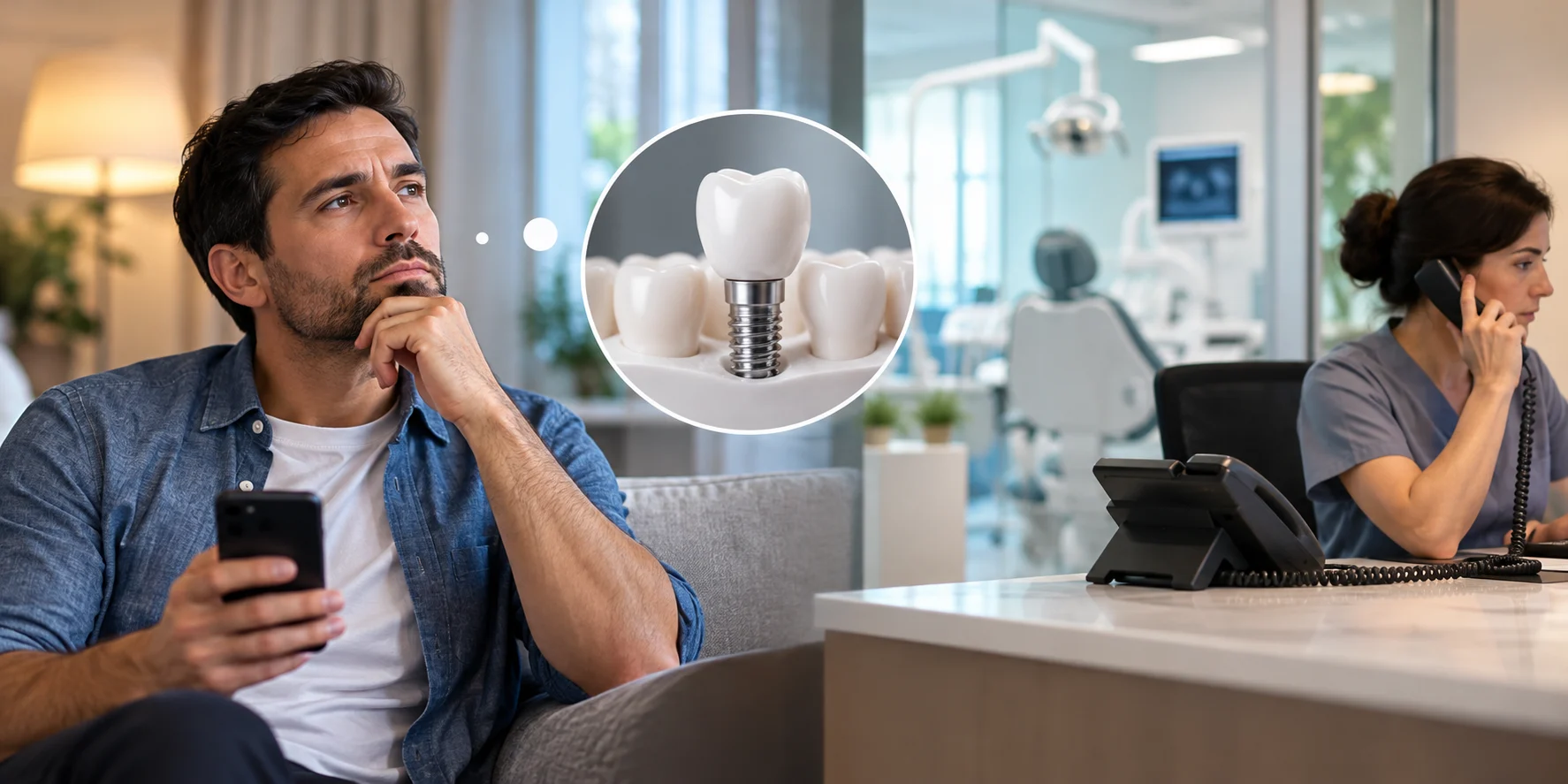
Why dental implant leads go quiet after the first call, what causes it, and how practices can follow up to recover the lead and book the consult.
Sign Up Now & Someone from Our Team Will Be in Touch Shortly!
Use the form below to send us a message, and we’ll get back to you as soon as we can.
.webp)
Track every marketing dollar and optimize patient conversions with ConvertLens. Gain valuable insights from your campaigns, ensuring you never miss a potential patient. Maximize ROI and grow your practice effortlessly.
-p-500.webp)