September 16, 2026
5 min
Learn why dental AI agents lose potential patients and how better conversations, accurate answers, seamless handoffs, and simpler booking can improve conversions.

September 16, 2026
5 min
Learn why dental AI agents lose potential patients and how better conversations, accurate answers, seamless handoffs, and simpler booking can improve conversions.
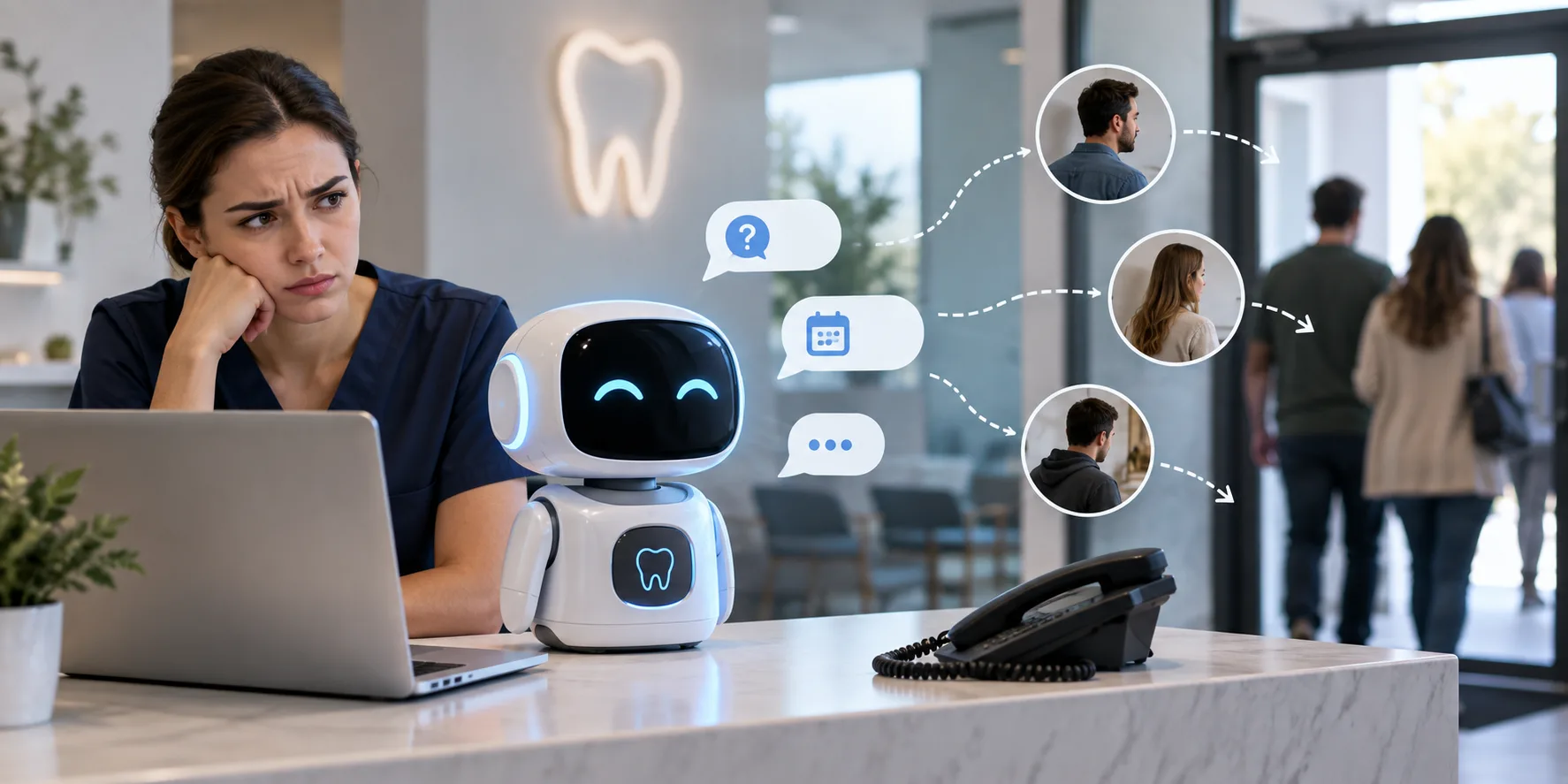
The pressure on dental practices to deliver faster, more convenient patient experiences is growing. Patients want quick answers, easy scheduling, and support whenever they need it, while practice owners expect every new technology investment to contribute to growth.
That is where a dental AI agent can seem like the perfect solution. It can answer routine questions, guide patients toward the right service, and help them take the next step, even after your front desk has gone home.
But here is where things can go off track. Your agent may respond instantly yet fail to turn interest into appointments. It may provide polished answers that do not address the patient’s real concern, recommend the wrong next step, or make booking feel harder than it should.
The issue is not always the technology itself. Often, the problem lies in how the agent has been trained, connected to your practice, and designed to guide patients. A dental AI agent can answer every question and still lose the patient if it does not create a clear path to care.
If your agent is attracting conversations but not converting them into booked appointments, these six reasons may explain why.
Before getting into the six reasons your dental AI agent may not be converting patients, it helps to look at what is happening behind the conversation.
Your agent may be answering questions, sharing treatment information, and even encouraging patients to book. But if it is not properly connected to your practice, the conversation can quickly hit a dead end. Patients do not just want answers. They want to know what happens next.
For example, your patient may ask:
If your agent cannot access the right information, check availability, or guide that patient to the next step, a promising conversation can disappear in seconds.
That is where integration matters.
Your dental AI agent needs to work with the way your practice actually operates, from your services and FAQs to scheduling, patient inquiries, and follow-ups. When those pieces are disconnected, the agent may sound helpful without actually helping the patient move forward.
Patients notice when a conversation feels cold or scripted. If your dental AI agent keeps sending generic replies, repeats information, or misses what the patient just said, the chat quickly feels more like a form than real help. Many patients will leave before they even consider booking.
How Viola AI Chat Agent Fixes It
Viola keeps the conversation connected to what each patient shares. If someone mentions a toothache or asks for an urgent appointment, Viola can respond to that concern and ask relevant follow-up questions. It can then share the right practice information and guide the patient toward booking, without making the conversation feel robotic.
A more natural conversation also depends on how the underlying information is structured and maintained. Practices can learn more about training chatbots for dental FAQs to understand how accurate, relevant information can support better patient interactions.
Patients come to your dental AI agent looking for clear answers they can trust. If it confidently gives incorrect information about a treatment, pricing, insurance, or appointment availability, that trust can disappear quickly. A patient who gets an uncertain or misleading answer may simply leave the chat and contact another practice.
How Viola AI Chat Agent Fixes It
Viola works from the information your practice provides instead of filling gaps with made-up answers. It can use your services, FAQs, practice details, and other approved information to respond to patient questions. When it does not have the right information, it can avoid pretending to know and guide the patient to your team instead.
Some dental AI agents push patients toward an appointment before they have even answered the question that brought them to the chat. A patient may want to understand a treatment, ask about cost, or know what to expect first. When every conversation ends with “Would you like to book?”, it can feel more like a sales pitch than helpful guidance.
How Viola AI Chat Agent Fixes It
Viola lets the conversation lead the way. It can answer a patient’s questions, understand what they are looking for, and offer the next step when it makes sense. If a patient is ready to book, Viola can help them move forward. If they need more information first, it gives them room to make a decision they feel comfortable with.
Some patient conversations need a human touch. A patient may have a sensitive concern, a complicated treatment question, or simply want to speak with someone from your practice. If your dental AI agent cannot hand that conversation off with the right context, the patient may have to start all over again. That extra effort can be enough to make them leave.
Imagine a patient saying, “I’m really nervous about getting a root canal. Can I talk to someone about sedation?” If the agent sends them through another menu instead of connecting them with your team, you could lose a patient who was ready to take the next step.
How Viola AI Chat Agent Fixes It
Viola can hand conversations to your team when a patient needs more help. Your staff can see the conversation and understand what the patient was asking before stepping in. The patient does not have to repeat the whole story, and your team can pick up the conversation from where Viola left off.
This becomes especially important when different systems need to work together. Understanding common PMS integration problems can help practices identify where disconnected technology may be creating friction for patients and staff.
Your dental AI agent can only help your practice if your team knows how to work with it. If your front desk does not trust the answers, does not know when to step in, or has to clean up after every conversation, the tool quickly becomes another task on their plate. And when setup misses important practice details, patients can feel the difference too.
How Viola AI Chat Agent Fixes It
Viola is designed to fit into your team’s workflow, not work around it. Your staff can see when a conversation needs their attention and step in when a patient needs a human response. With the right practice information, clear handoff rules, and proper setup, Viola can handle routine conversations while your team focuses on the patients who need them most.
If getting an appointment through your dental AI agent takes too many steps, even your patients can lose interest quickly. A patient may be ready to book, but if they have to repeat their details, click through several screens, or wait for someone to respond, that moment of intent can disappear.
How Viola AI Chat Agent Fixes It
Viola keeps the next step simple. It can collect the details needed from the patient and guide them toward scheduling without making them jump through unnecessary hoops. The easier you make booking, the less chance there is for an interested patient to leave before they get an appointment.
Reducing friction at this stage is closely tied to improving dental lead conversion rates. Even small barriers between initial interest and scheduling can affect whether a potential patient takes the next step.
The future of dental care is not just about putting a chatbot on your website. Patients want quick answers, helpful guidance, and an easy path to the care they need, even when your front desk is busy.
A well-built dental AI virtual assistant can:
That is where a dental AI virtual assistant can make a real difference. It can handle routine patient conversations while keeping the experience connected to your practice. The aim is not to replace the human side of dentistry. It is to make sure patients can get the help they need before an unanswered question turns into a lost appointment.
Ultimately, the technology should support a smoother digital patient experience, from the first question to the eventual appointment. When the conversation feels relevant, the information is accurate, handoffs are seamless, and booking is simple, an AI-powered patient interaction can become a useful part of the overall patient journey.


September 16, 2026
5 min
Learn why dental AI agents lose potential patients and how better conversations, accurate answers, seamless handoffs, and simpler booking can improve conversions.

September 15, 2026
6 min
Compare AI dental receptionists and answering services to understand differences in call handling, appointment booking, coverage, integrations, and front desk support.

September 2, 2026
6 min
Discover the key metrics orthodontists can use to track leads, consultations, treatment starts, marketing costs, and ROI for smarter growth decisions.
Sign Up Now & Someone from Our Team Will Be in Touch Shortly!
Use the form below to send us a message, and we’ll get back to you as soon as we can.
.webp)
Track every marketing dollar and optimize patient conversions with ConvertLens. Gain valuable insights from your campaigns, ensuring you never miss a potential patient. Maximize ROI and grow your practice effortlessly.
-p-500.webp)