October 28, 2026
8 min
How traditional voicemail loses new dental patients, and what a reliable call-handling system looks like instead.
October 28, 2026
8 min
How traditional voicemail loses new dental patients, and what a reliable call-handling system looks like instead.
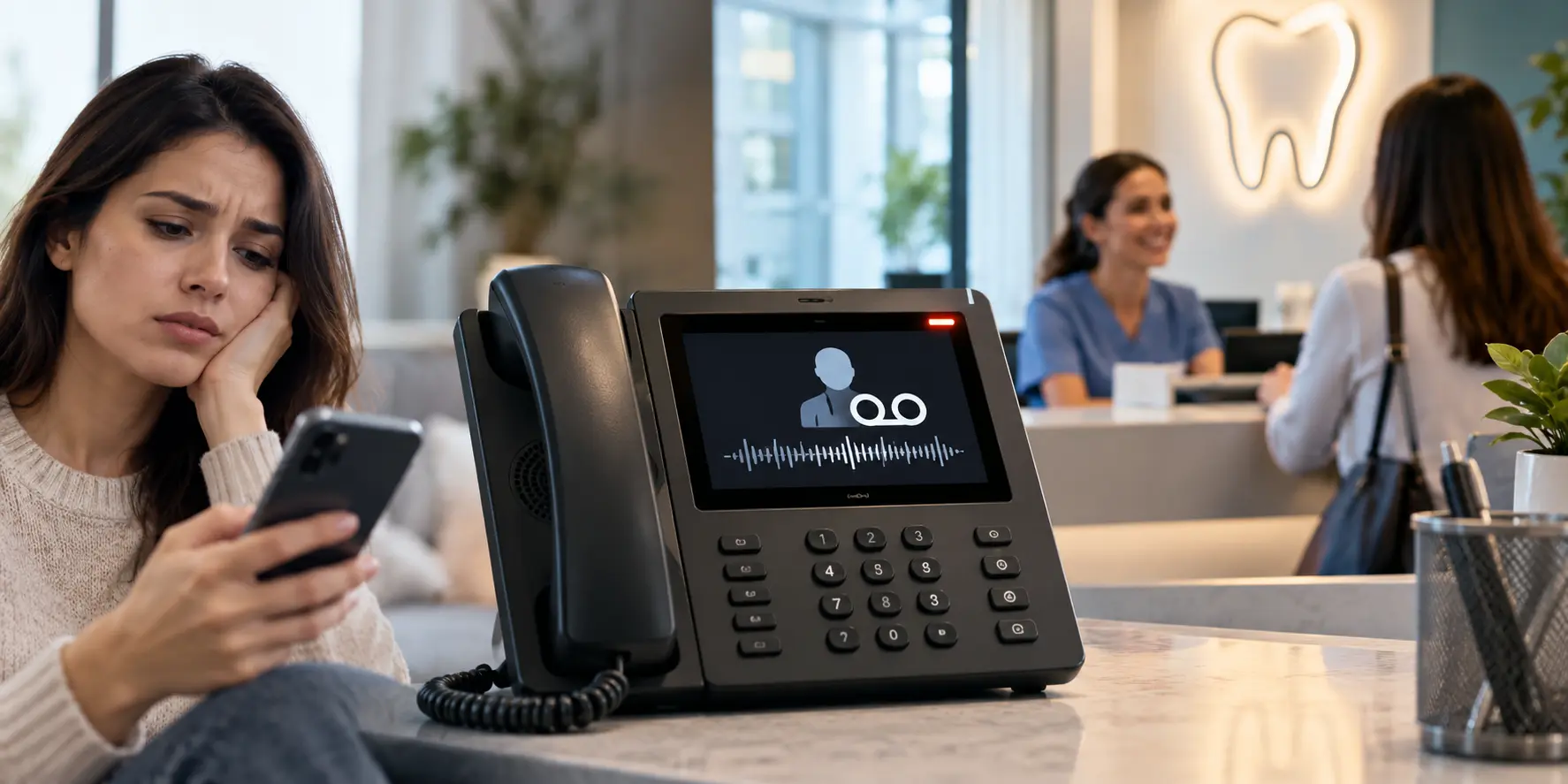
Traditional voicemail may seem like a practical way to handle missed calls, but it can cost your dental practice valuable new-patient bookings. When a potential patient calls and reaches a recorded message, there's no guarantee they'll leave their details and wait for your team to call back. Many will simply move on to a practice that answers.
The numbers may vary from one practice to another, but the problem is easy to recognize: every unanswered call creates a gap between a patient looking to book and your team being able to help. And when someone is ready to make an appointment, a delayed response can give them time to look elsewhere.
This puts dental practice owners in a difficult position. Your front desk has plenty to manage, but how do you make sure a busy phone line doesn't cost you the very patients you're trying to attract?
In this article, we'll explore why traditional voicemail can hurt your new-patient booking rate and what your practice can do to turn more missed calls into opportunities to connect with prospective patients.
Imagine someone has put off a dental appointment for weeks. The toothache is getting harder to ignore, so they search “dentist near me accepting new patients” and start calling local practices. Yours is the first number they try.
No answer. The voicemail greeting starts, and they hang up. There's no message to return, no name for your team to follow up on, and no way to know they were ever interested. A few minutes later, they book with another dentist.
That's the trouble with relying on voicemail to catch missed inquiries. Your marketing has already done its job: it brought someone to your website and convinced them to call. But if nobody answers, that effort may lead to an appointment for another practice instead.
Existing patients may be more willing to leave a message because they already know your team. Someone considering your practice for the first time has no such connection. They're still deciding where to go, and an unanswered call gives them little reason to wait around.
When a potential patient is ready to book but can't reach your team, all the effort that brought them to your practice can end with a missed call and an appointment booked elsewhere.
There's a reason people hang up instead of leaving a voicemail: calling another dentist is often easier than waiting for a callback. Someone who has finally found time to book an appointment may not want to explain their situation to a recording and hope someone gets back to them.
And for a new patient, there's little tying them to your practice yet. They haven't met your team or experienced your service. If your phone goes unanswered, they can simply try the next practice on Google.
That makes a missed call different from a missed conversation with an existing patient. You may never know who called, why they needed an appointment, or whether they were ready to book. By the time your team has a chance to respond, the opportunity may already be gone.
Traditional voicemail gives dental practices a way to manage calls when the front desk is busy. However, it also leaves prospective patients waiting at a time when they may be ready to book an appointment.
Indeed, callers often reach out with a specific question or a clear intention to schedule. Asking them to leave a message adds another step before they can get the help they need. For dental practices, this creates a challenge: how do you manage a busy phone line without losing opportunities to bring in new patients?
Here are four reasons traditional voicemail can get in the way.
When a caller reaches voicemail, they must listen to the greeting, leave their contact details, explain their reason for calling, and wait for a response. For someone trying to arrange an appointment during a short break, that process can feel unnecessarily long.
Offering online booking or a prompt text response gives callers a more convenient way to get in touch without waiting for your front desk to become available.
Your team may be busy assisting patients, answering questions, or handling administrative work. But a caller who hears a recorded message has no idea what's happening at your practice.
That first interaction can affect their impression of your service, particularly if they're calling for the first time. A clear follow-up process helps reassure callers that their inquiry matters and someone will get back to them.
When callers leave messages, your team has their details and can return the call. When they hang up without leaving anything, the opportunity can disappear without a trace.
Tracking missed calls alongside callbacks and confirmed appointments helps you understand how many inquiries your practice receives, how many get a response, and how many turn into bookings. Without that information, it becomes difficult to see where potential new patients are being lost.
Voicemail can record a caller's details, but it cannot check appointment availability, answer routine questions, or help someone choose a suitable time.
Your team must handle those steps when they return the call, which can delay the booking process. Online scheduling, text responses, and an AI phone agent that can manage routine inquiries offer other ways for callers to get assistance when your front desk is unavailable.
A busy dental front desk can feel like an air traffic control tower. One patient is checking in, another needs help with insurance, and the phone starts ringing just as your team is juggling three other tasks. A reliable call-handling system keeps every caller connected to your practice, even during the busiest parts of the day.
Every patient call is a chance to help them take the next step with your practice. A live answering service can collect patient details, while an AI phone agent can answer routine questions or direct callers to the right person. A callback option also gives them a clear way to connect with your team when staff are occupied. Each route keeps the conversation moving and helps patients feel that their call matters.
When a patient is ready to book, make the next step as easy as possible. Online scheduling lets them explore available appointments at a time that suits them, while an AI phone agent connected to your scheduling system may be able to book directly. Keep availability up to date, send clear confirmations, and offer a simple way to reach your team for requests that need personal attention.
Your call-handling experience should sound and feel like your practice. The person or system answering calls should know your office hours, services, and booking process, then share that information in a warm, natural way that reflects how your team speaks to patients.
Some conversations also call for a personal touch. Patients with urgent symptoms, detailed treatment questions, or more involved appointment needs should have a clear route to your team. Passing along the relevant details helps staff pick up the conversation smoothly, so patients can focus on getting the help they need.
You can make changes to the way your practice handles calls, but how do you know if those changes are actually bringing in more patients? The simplest way is to look at the numbers every week.
Set aside some time every Monday to review the previous week's calls. Keep track of:
Now, here's where things get interesting. If your team is answering more calls but the number of appointments still stays the same, something in the conversation may need attention. If several new patient inquiries come in after hours and very few turn into bookings, you may need a better way to handle those calls.
The numbers help you see what's happening instead of relying on assumptions. Review them every week, look for patterns, and make changes where needed. Over time, you'll have a much clearer idea of whether your call-handling process is helping more patients get through the door.
A missed call might seem like a small thing in a busy dental practice, but what happens after that call can make a real difference. When a new patient can't get through, they may move on to another practice. When someone answers, offers clear guidance, and makes booking easy, you give that person a reason to take the next step with you.
You don't need to overhaul your entire front desk to get started. Look at how your team handles incoming calls, where callers tend to drop off, and how many inquiries turn into booked appointments. Start with the gaps you can see, make a few practical changes, and keep track of what improves.
Over time, you'll have a better idea of what's helping your practice turn more calls into new patient appointments. And that's what matters: making it easier for people to reach your team, book the care they need, and choose your practice with confidence.
Is voicemail ever good enough for a dental practice?
It can work for existing patients who already know your team and are comfortable leaving a message. New patients are far less forgiving, since they have no relationship with your practice yet and will often just call the next dentist on their list instead.
What's the fastest fix for reducing missed calls?
Adding a callback option or a prompt text response when a call goes unanswered is usually the quickest change to make, since it doesn't require replacing your phone system outright. From there, you can look at online scheduling and an AI phone agent for routine inquiries.
How is an AI phone agent different from a live answering service?
A live answering service routes calls to a person who can collect details and triage the caller. An AI phone agent can additionally check your scheduling system and, in some setups, book an appointment directly, without needing a human to pick up first.
What should a practice track do to know if its call handling is working?
Total inbound calls, live answer rate, voicemails and hang-ups, new patient enquiries, appointments booked, and after-hours calls. Reviewing these weekly shows whether more answered calls are actually turning into more booked appointments.
Should every call be handled by a person?
Not necessarily. Routine questions and simple scheduling requests can often be handled by an AI phone agent or online booking, while urgent symptoms, detailed treatment questions, and more involved appointment needs should still have a clear route to a person on your team.


October 28, 2026
8 min
How traditional voicemail loses new dental patients, and what a reliable call-handling system looks like instead.

October 28, 2026
8 min
Six ways dental practices can handle phone and text cancellations, fill the gap, and turn cancellations into rebooked appointments.
October 28, 2026
9 min
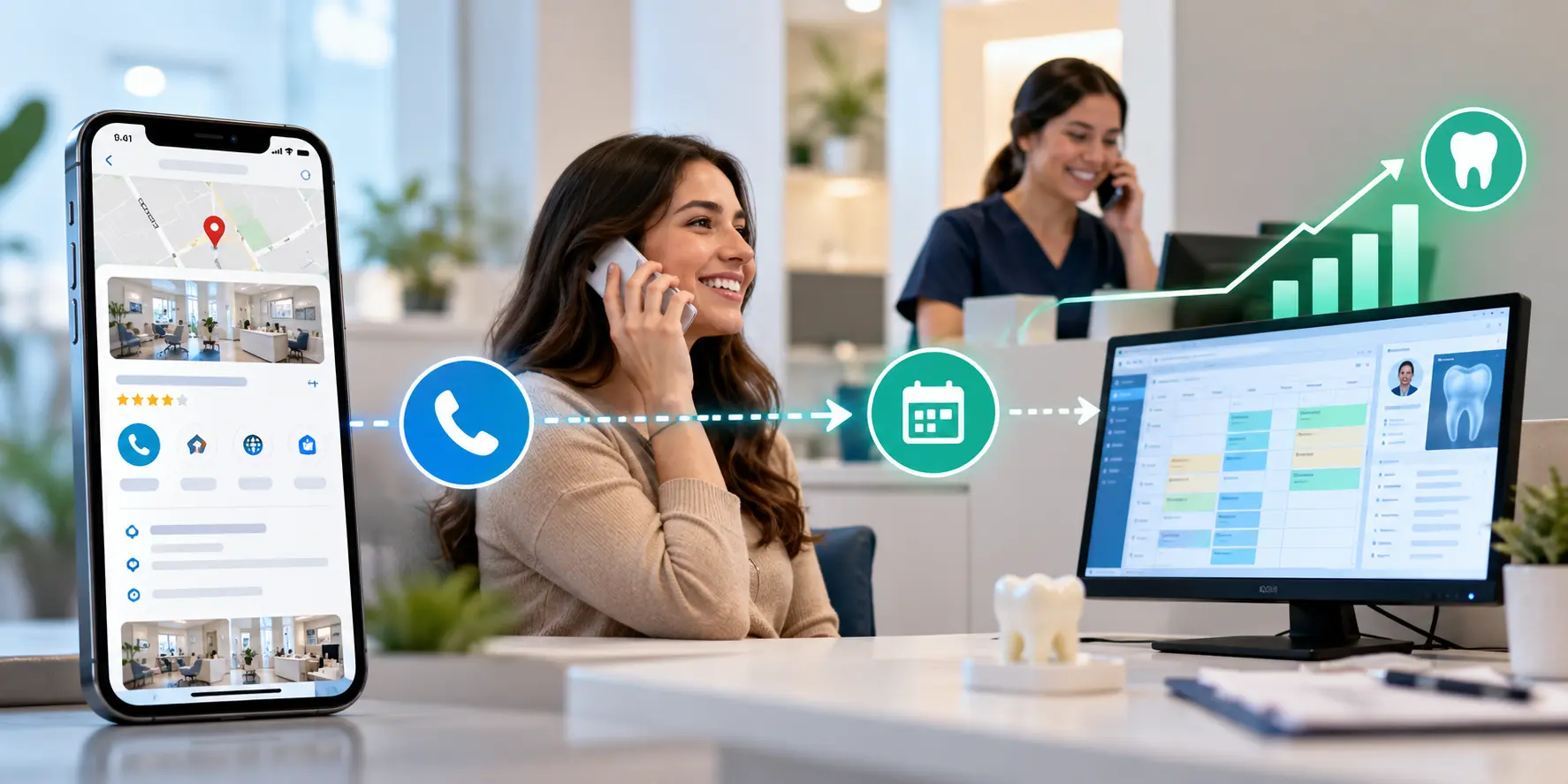
How to connect Google Business Profile call tracking with PMS data to see which calls turn into booked patients and realized production.
Sign Up Now & Someone from Our Team Will Be in Touch Shortly!
Use the form below to send us a message, and we’ll get back to you as soon as we can.

Track every marketing dollar and optimize patient conversions with ConvertLens. Gain valuable insights from your campaigns, ensuring you never miss a potential patient. Maximize ROI and grow your practice effortlessly.
