October 7, 2026
5 min
Missed-call text-back vs. AI receptionist for dental practices: what each handles, when each wins, and which recovers more booked appointments.
August 31, 2026
8 min
Call recordings help dental practices uncover missed booking opportunities, improve patient communication, train front desk teams, and connect calls to revenue.
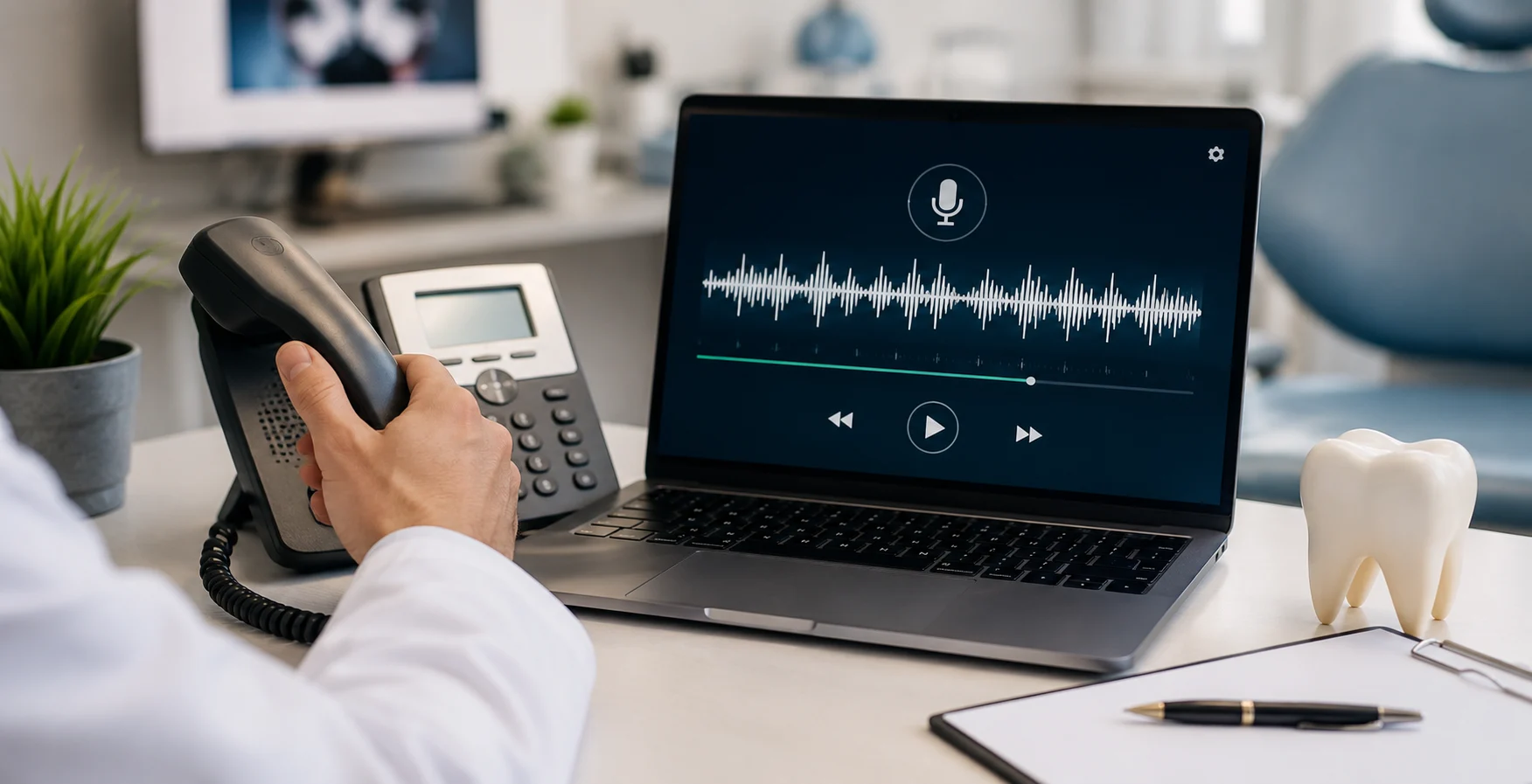
A dental practice can have strong call numbers and still miss what is happening in those conversations. Your dashboard might show answered calls, booked appointments, and missed calls, but it will not tell you why a new patient decided not to book, how your front desk handled a treatment question, or where a caller was left waiting.
That is where call recordings become useful. They let you hear the conversations behind the numbers and see what is actually happening on the phone. You can use them to coach your team, improve how calls are handled, find missed booking opportunities, and understand where patients may be getting frustrated.
Call metrics tell you what happened. Recordings can help you understand why it happened. For a dental practice, that difference can lead to better calls, better follow-up, and more patients getting through the door.
Many dental practices now use call tracking for dental practices that record calls, giving them more than just a missed call or booking number. Depending on the system, recordings can be saved and reviewed later to understand how conversations with new and existing patients are handled. Practitioners can use them for front-desk training, call-quality checks, patient service, and identifying where potential bookings may be lost.
Before you turn on call recording at your dental practice, make sure you know where your callers are located and what consent rules apply. U.S. call recording laws are not the same everywhere. Federal law generally follows a one-party consent standard, but several states require consent from everyone on the call.
For a dental practice, the safest approach is usually to clearly tell patients that the call is being recorded and give them an opportunity to continue or decline. A simple opening such as "This call may be recorded for quality and training purposes” can help, but the exact disclosure and consent requirements depend on the states involved.
A few important points:
For additional context on protecting patient information, practices should also understand common dental HIPAA violations and how they can affect patient communications.
Call recordings are useful for more than keeping a record of conversations. When your team actually reviews them, they can reveal where patients are getting stuck, where calls are being handled well, and where your practice may be leaving appointments on the table.
A patient can call your practice, have a perfectly good conversation, and still never book. That is the kind of missed opportunity that can be hard to spot from call numbers alone.
Listening to the recording can reveal what happened. Maybe the patient had questions about cost, insurance, treatment, or appointment times that were not fully addressed. Once you know where the conversation lost momentum, your team can handle similar calls differently next time.
Pairing these insights with call-to-appointment conversion data can make it easier to understand which conversations actually result in scheduled appointments.
It is easy to tell someone to “handle calls better.” It is much more useful to show them what could have gone differently. Call recordings give practice managers real conversations to work with, from the opening greeting to the final attempt to schedule.
You can recognize what a team member is doing well and coach the small moments that could make the next call stronger.
Reviewing calls alongside data about front desk performance can also help managers identify patterns that may otherwise remain hidden.
Patients do not always ask the questions you expect them to ask. One caller may want to know about financing, while another is worried about insurance or how soon they can be seen.
Your recordings can uncover these patterns over time.
That gives your team a better feel for what patients need before they are comfortable putting an appointment on the calendar.
For a new patient, the phone call is often their first real interaction with your practice. A rushed answer or confusing explanation can leave the wrong impression before they ever meet the dentist.
Listening to calls helps you hear those moments for yourself. You can then make simple changes to how your team answers questions, handles concerns, and guides callers toward an appointment.
The best call script does not sound like a script. It should help your team know what to say without making the conversation feel stiff or rehearsed.
Recorded calls can show you the questions, objections, and sticking points that come up again and again. Use those patterns to shape talking points that feel natural and actually fit the conversations your team is having.
A new front desk team member learns a lot by hearing real patient conversations. Instead of handing them a script and expecting them to figure it out on their own, you can use selected recordings to show how experienced staff handles common questions, concerns, and booking conversations. It gives new hires a clearer sense of how a good patient call should feel, making it easier to build confidence and settle into the role.
Consistency becomes harder when you are managing several dental offices. One location may handle new patient calls beautifully, while another may leave too much of the conversation to chance. Reviewing calls across locations can help you see those differences clearly.
You can then share what is working instead of asking every office to reinvent its approach.
For dental groups, multi-location analytics can provide another layer of insight when comparing call performance across offices.
Call recordings become even more valuable when paired with call tracking and booking data. You can see which conversations turned into appointments and where potential patients dropped off.
Connecting phone activity with marketing campaign attribution can also help your practice understand which marketing efforts are generating calls that turn into real patient opportunities.
Not every recording needs to be about finding mistakes. Strong calls can show your team what good patient communication looks like and give managers examples worth sharing.
Your phone is often the first real conversation a new patient has with your practice. Call recordings help you understand that conversation from the patient's side and make small changes that can lead to more booked appointments.
With ConvertLens, dental practices can record and review patient calls while keeping call tracking and performance insights in one place. Instead of looking only at how many calls your practice receives, your team can understand what happens during those conversations and where booking opportunities may be missed.
With our call tracking & recording software, dental teams can use features such as
Call recordings and analytics give your practice more than a list of incoming calls. They help you see what is happening behind those calls, from where patients found you to how your front desk handled the conversation and whether it ended with an appointment.



October 7, 2026
5 min
Missed-call text-back vs. AI receptionist for dental practices: what each handles, when each wins, and which recovers more booked appointments.

October 7, 2026
7 min
AI follow-up helps cosmetic dental practices respond faster, reduce no-shows, and convert more high-intent veneer and Invisalign leads into booked consultations.

September 30, 2026
8 min
Slow lead follow-up can silently drain your dental marketing budget. See where enquiries fall through the cracks and how faster response recovers lost patient value.
Sign Up Now & Someone from Our Team Will Be in Touch Shortly!
Use the form below to send us a message, and we’ll get back to you as soon as we can.
.webp)
Track every marketing dollar and optimize patient conversions with ConvertLens. Gain valuable insights from your campaigns, ensuring you never miss a potential patient. Maximize ROI and grow your practice effortlessly.
-p-500.webp)