October 7, 2026
5 min
Missed-call text-back vs. AI receptionist for dental practices: what each handles, when each wins, and which recovers more booked appointments.
August 31, 2026
8 min
Learn how after-hours patient communication helps dental practices stay responsive, support patients, capture bookings, and reduce front desk pressure.

Dental emergencies do not follow your office hours. A patient can chip a tooth late at night, develop sudden tooth pain, or wake up with swelling and immediately start looking for help.
That is when your phone can keep ringing long after your front desk has gone home. Patients may call to ask about emergency appointments, explain their symptoms, or simply find out what they should do next. And when no one answers, they may not wait until morning. They may call another dental practice instead.
The same problem can happen with routine questions, too. Patients may want to reschedule an appointment, check treatment details, or ask about payment and insurance. Your team cannot realistically be available every hour of the day to answer every call.
But leaving patients with no way to reach you is not the only option.
This guide will explain why after-hours patient communication matters for your dental practice and how to manage it without adding more pressure on your front desk team.
For many practices, the call goes to voicemail, waits until the next morning, or simply goes unanswered. That might work for a routine question, but it can be a problem when someone is dealing with sudden tooth pain or a dental emergency.
Patients may be calling to find out if you offer emergency appointments, ask what they should do next, or get basic information about their treatment. If they cannot reach any team member of your clinic, they may not leave a message and wait. They may call another practice instead.
Missed after-hours calls can mean:
Your front desk team cannot answer the phone around the clock. They need time away from work, too. But that does not mean your patients should be left wondering what to do when your office is closed.
A good after-hours communication setup gives patients a way to get help, information, or the right next step without expecting your staff to be available all night.
Your patients may need your practice outside the hours your front desk is open. An AI receptionist gives them another way to get answers, make a request, or start the booking process without waiting until the next morning.
Depending on the system and integrations you choose, an AI receptionist can answer calls, understand why a patient is calling, provide approved information, help with appointments, and pass important calls or messages to your team.
Here are some of the ways it can help:
A patient does not always call because something is wrong. They may finally have a few minutes after work to ask about Invisalign, check your availability, or find out how to schedule a consultation. An AI receptionist can pick up when your team cannot. It can have a natural conversation, answer the questions it has been set up to handle, and guide the patient toward the right next step.
For your practice, that means fewer calls sitting unanswered and fewer patients having to remember to try again tomorrow.
An AI receptionist can step in when your front desk is unavailable and help a patient book their visit. It can check available times, offer suitable options, and confirm the appointment when connected to your scheduling system. So if someone calls after hours ready to book, they can get it done without waiting for your office to open.
When you integrate a smart AI voice tool into your practice, it can do more than answer calls. It can ask the right questions, understand why the patient is calling, and collect the details your team needs. Whether they are looking for a new appointment, asking about a treatment, or calling with an urgent concern, the conversation can be handled based on your practice's guidelines.
Patients rarely pick up the phone and book straight away. They often have questions first. How much does it cost? What treatments do you offer? When are you open? Do you have appointments that fit their schedule?
A well-trained AI receptionist can handle these everyday questions just like a front desk would, using the information your practice provides. It gives patients a chance to get the answers they need before deciding whether they are ready to book.
Practices using AI for this purpose can also benefit from clearly defined dental FAQs for chatbots, helping ensure responses remain consistent with the information approved by the practice.
Not every call should be handled by AI. If a patient has a complex question, needs personal assistance, or raises an urgent concern, the AI receptionist can follow the escalation rules set by your practice. It can collect the key details and route the call or notify your team for follow-up, so patients know what happens next.
Your reception team already has plenty to manage. They are checking patients in, answering questions, coordinating schedules, handling payments, and dealing with the phones at the same time.
Having an AI receptionist handle routine calls and after-hours inquiries can take some of that repetitive work off their plate. Your team can spend more of their working day helping the patients who are actually in the office.
You should not have to start every morning wondering who called the night before.
Depending on the system, your team can receive call summaries, contact details, booking information, or notifications about calls that need attention. That makes it easier to see what happened after hours and follow up where needed.
It is completely fair to have questions before putting an AI receptionist in front of your patients. You may be wondering whether it will replace your front desk, sound too robotic, or create more work than it saves.
Here are a few things worth clearing up.
An AI receptionist can take care of routine calls, common questions, and some after-hours inquiries. Your team can then spend more time with patients in the practice and handle conversations that genuinely need a person.
Think of it as another set of hands, not a replacement for your staff.
It depends on what the patient needs.
If someone is calling at 9 p.m. to ask about your hours, treatment options, or appointment availability, getting a quick answer may matter more than who answers the phone. A well-configured AI receptionist can have a natural conversation and make it clear when a call needs to be passed to your team.
Modern AI receptionists can handle more than simple keywords.
They can understand the context of a conversation, ask follow-up questions, and respond based on the information and rules your practice provides. They still have limits, which is why serious or complex situations should have a clear path to your team.
It does not have to be.
You can start with the calls your team handles most often, such as common questions, appointment requests, and after-hours calls. Once the system is working well for your practice, you can decide whether you want to add more capabilities.
Only if it is poorly set up.
The goal should be to make it easier for patients to reach your practice, not to remove the human side of it. Your practice's greeting, tone, FAQs, booking process, and escalation rules can all be built into the experience.
Used properly, an AI receptionist handles the routine while your team handles the human moments that matter most.
Not every AI receptionist will work well for a dental practice. When you are comparing options, look beyond the demo and focus on what your patients and front desk actually need.
Your Patients should not feel like they are talking to a machine. The AI Voice agency you choose for your dental practice should understand what your patients are saying, respond naturally, and keep the conversation simple and easy to follow.
The AI voice tool should connect with your scheduling system, show patients available times, and help them book an appointment directly when the appropriate integration is available.
Your AI receptionist should understand common dental treatments, terminology, and questions about your practice so it can give useful answers instead of generic responses.
Always make sure your AI receptionist knows when a call needs a real person. It should follow your practice's emergency process, give patients the right next steps, and alert or connect your team when the situation calls for human help.
Your patients may share personal information during a call. Make sure the provider has strong security in place and can meet the privacy requirements that apply to your practice, including a BAA when required.
Practices should also understand the importance of protecting patient data in dental analytics when evaluating systems that collect, store, or process patient information.
If you regularly serve patients who speak other languages, look for support that actually works in those languages. Patients should be able to explain what they need and understand the response without struggling through the conversation.
AI cannot replace every conversation. When a patient needs your staff, getting through to a real person should be simple rather than another hurdle they have to overcome.
Understanding the differences between AI answering services and a human front desk can help practices decide which calls should remain with staff and which can be handled automatically.
Before AI receptionists, dental practices had a few common ways to manage calls once the front desk went home. Some were simple and inexpensive, while others gave patients more direct access to the practice.
Here is what those options typically looked like.
For many dental practices, voicemail was the standard after-hours solution.
A patient would hear a recorded message, leave their name and number, and wait for someone to call them back. It works for basic requests, but a patient with tooth pain or an urgent question may not want to wait until the next morning for help.
An answering service gives patients a real person to speak with after the office closes.
The operator can take a message, collect the patient's details, and follow the instructions provided by your practice. The limitation is that they may not have access to your live schedule or know your practice well enough to handle every question.
Some dentists simply forward the office phone to their own cell phone or another team member's phone.
It means someone familiar with the practice can answer directly, which can be helpful for urgent calls. But it also means being available after hours, during weekends, and sometimes when you are supposed to be completely off.
Online scheduling gives patients a way to book without speaking with anyone.
A patient who knows they want a cleaning, consultation, or other routine visit can choose an available time and schedule it themselves. But if they have questions before booking, a scheduling page cannot have that conversation with them.
These options can still be useful, and many practices use more than one. The bigger question is what happens when a patient needs more than a voicemail, a booking form, or a message taken by someone who does not know your practice.
That is where newer after-hours options, including AI receptionists, can provide another layer of support.


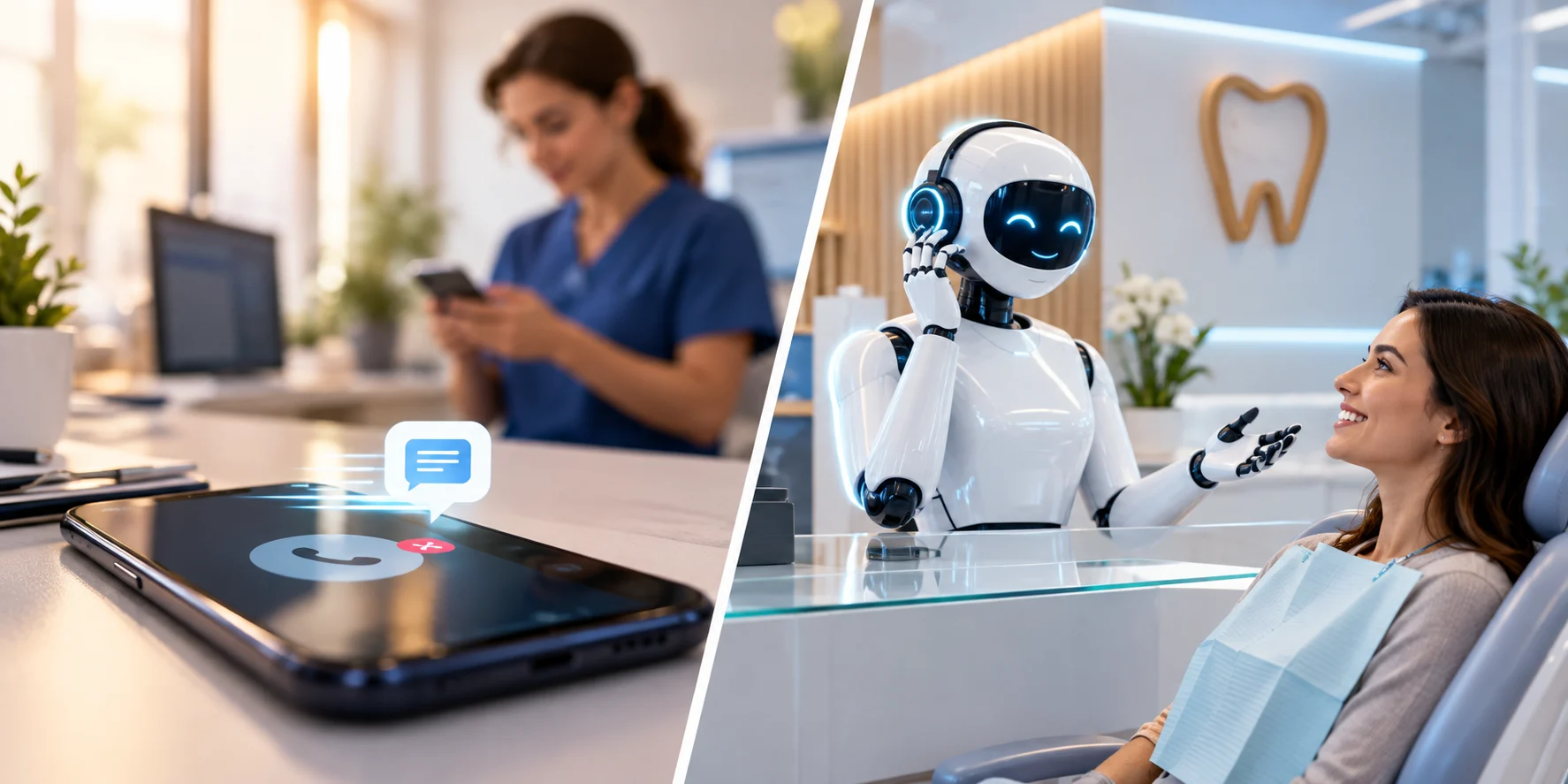
October 7, 2026
5 min
Missed-call text-back vs. AI receptionist for dental practices: what each handles, when each wins, and which recovers more booked appointments.
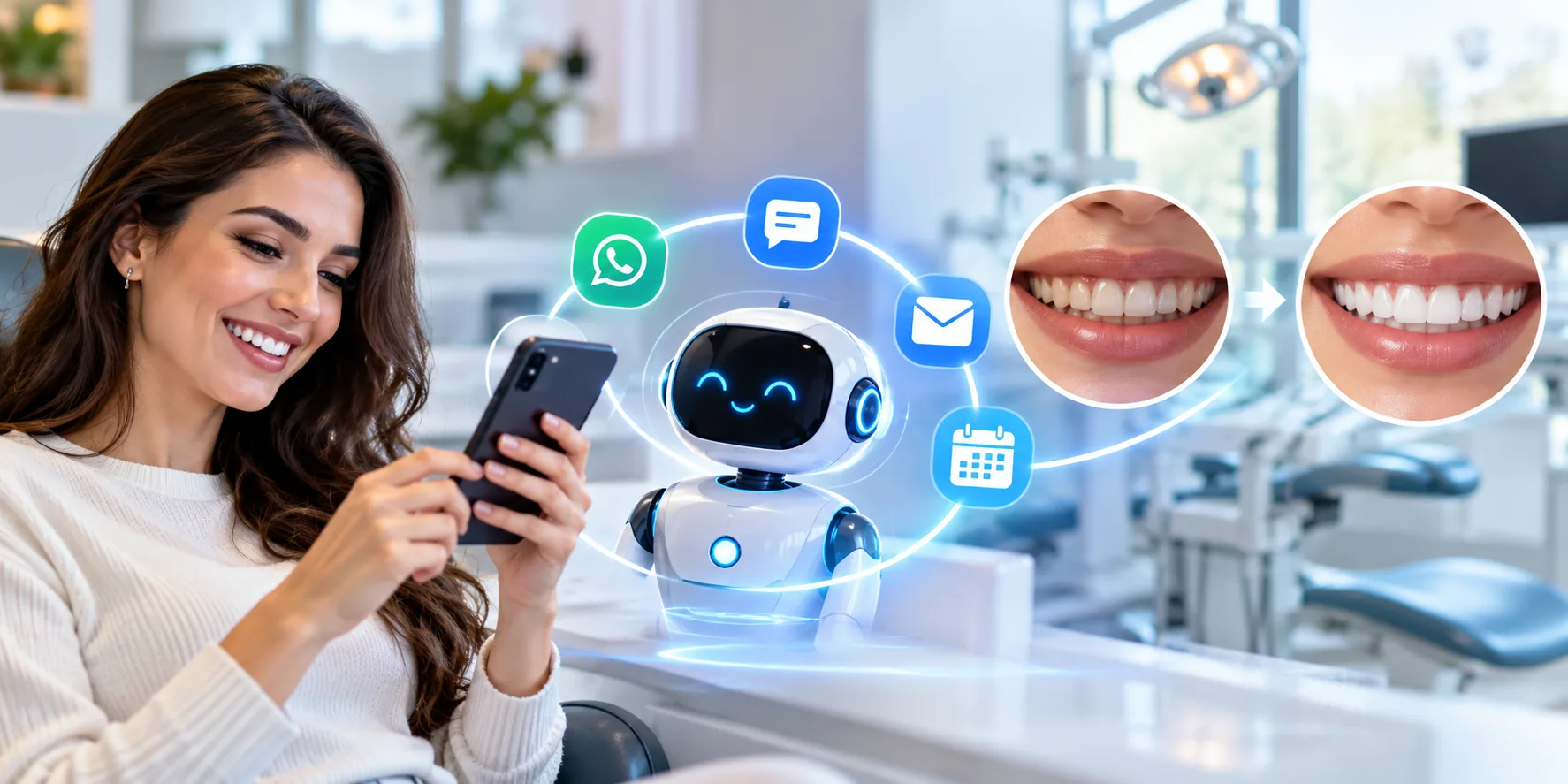
October 7, 2026
7 min
AI follow-up helps cosmetic dental practices respond faster, reduce no-shows, and convert more high-intent veneer and Invisalign leads into booked consultations.

September 30, 2026
8 min
Slow lead follow-up can silently drain your dental marketing budget. See where enquiries fall through the cracks and how faster response recovers lost patient value.
Sign Up Now & Someone from Our Team Will Be in Touch Shortly!
Use the form below to send us a message, and we’ll get back to you as soon as we can.
.webp)
Track every marketing dollar and optimize patient conversions with ConvertLens. Gain valuable insights from your campaigns, ensuring you never miss a potential patient. Maximize ROI and grow your practice effortlessly.
-p-500.webp)