November 17, 2026
8 min
A missed call recovery rate shows which callers actually become booked, attended patients, not just who got a callback. Here is how to measure it.
November 17, 2026
8 min
A missed call recovery rate shows which callers actually become booked, attended patients, not just who got a callback. Here is how to measure it.
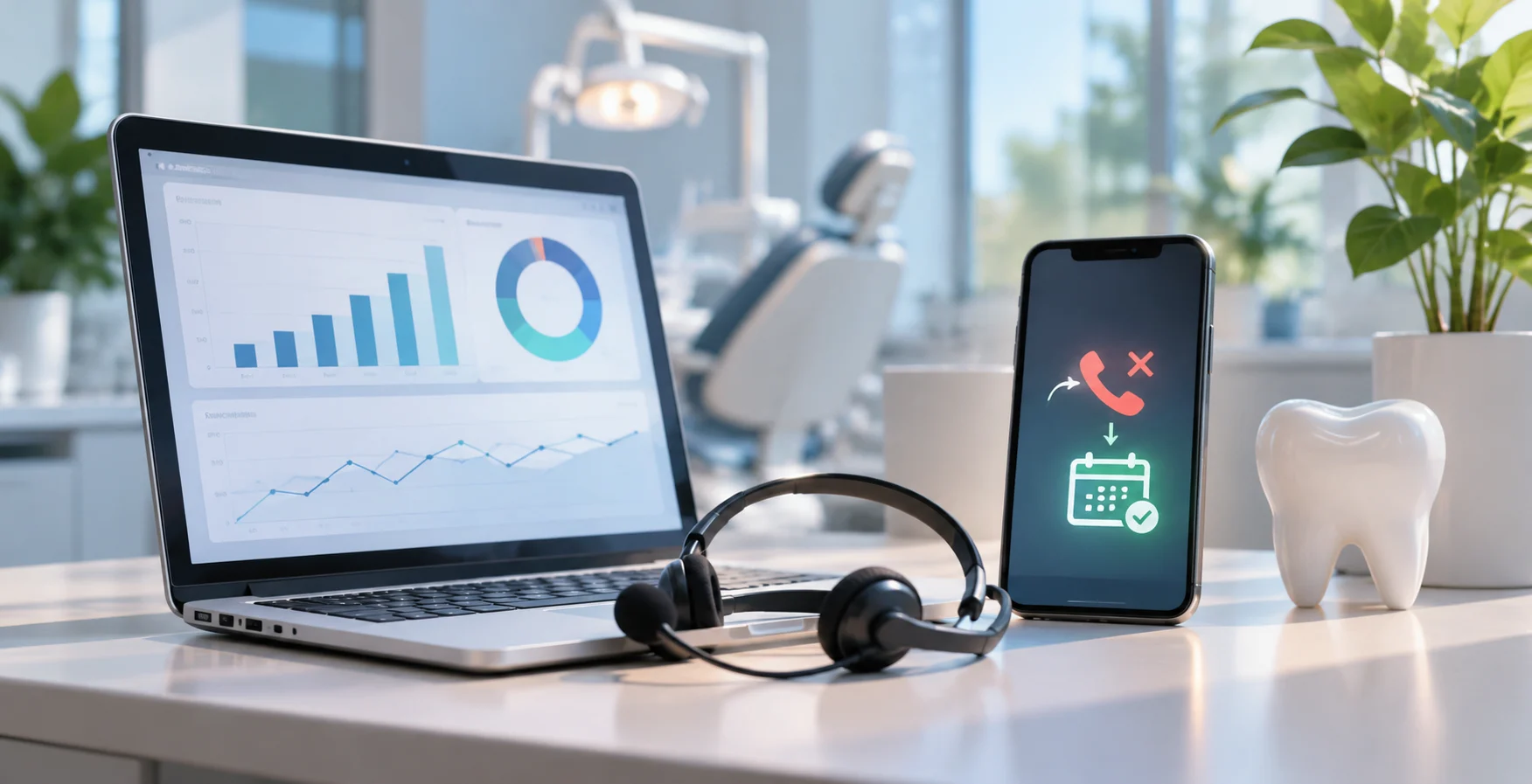
Missing a call from a potential patient doesn't always mean losing their business. But if nobody follows up, that missed opportunity can quickly turn into a caller finding another dental practice instead, one of the quiet ways missed calls drain practice revenue over time. For practices that rely on phone enquiries, recovering missed calls is only half the job. You also need to know how many callers get a response, how many call back, and how many eventually become booked, attended patients. That is where the right metrics make a difference.
By tracking missed call recovery rate, response time, callback success, and conversion to attended appointments, you can see how well your follow-up process works, spot where enquiries slip away, and get more value from leads you have already paid to attract. In this article, we will look at the metrics that matter and how to use them to measure the real value of missed call recovery.
Missed calls are more than a front-desk inconvenience. They can mean lost new patients, unfilled appointment slots, and revenue that never makes it onto your books. Dental practices can miss a sizable share of inbound calls during business hours, and after-hours calls often go unanswered if no one is available to take them. Good dental call tracking is what makes it possible to see which of those missed calls actually get recovered, rather than just how many came in.
Many of those callers are prospective patients. They may not leave a voicemail or try again later. Instead, they call another dental practice that picks up the phone.
That is why simply counting how many calls your team answers does not tell you much about how well you are recovering missed opportunities. What matters is what happens next. Did someone return the call? Did the patient respond? Did that conversation lead to an appointment? And did the patient actually turn up?
When you measure each step, missed call recovery becomes something you can improve rather than leave to chance. You can see how many opportunities your practice is winning back, where follow-ups are falling short, and how much booked production comes from calls that would otherwise have gone unanswered.
For a dental practice, a missed call is only recovered when the caller gets back in touch and eventually comes in for an appointment. Returning the call or getting someone on the phone is a good start, but it does not tell you whether that missed opportunity brought a new patient through your door. That distinction is really a question of call to appointment conversion tracking, not just call volume.
You can measure this with a simple formula:
Missed Call Recovery Rate = (Appointments attended after a missed-call follow-up ÷ Total missed or abandoned calls) × 100
For example, if your practice misses 100 calls and 20 of those callers book and attend an appointment after your team follows up, your recovery rate is 20 percent.
It is also worth keeping an eye on what happens between the missed call and the appointment. How many callers did your team reach? How many called back? How many booked? And how many actually showed up? Looking at these numbers separately gives you a much clearer picture of where your follow-up is working and where callers are dropping off.
Start by looking at what happens after your practice misses a call. Does someone from your team call the patient back? Do they get through? Does the caller book an appointment and turn up? Tracking each of those checkpoints separately, rather than only the final recovery rate, is what shows you where callers are falling out of the process.
For this calculation, count a call as recovered when the caller gets back in touch and books an appointment, or takes another agreed next step. A text message or an unanswered callback on its own does not count as recovery, since neither confirms the caller actually came back to you.
Suppose your practice missed 100 calls last month. Your team followed up with 80 callers, 40 responded, 25 booked appointments, and 20 came in.

Here, 25 callers booked an appointment, but only 20 made it to the practice. Keeping both figures separate shows how many missed callers you managed to bring back and how many actually became patient visits.
The overall recovery rate tells you how the process is doing as a whole, but a few supporting numbers help you see where it is breaking down.
Reviewing these alongside the overall recovery rate usually points to a specific fix, whether that is staffing the phones differently, shortening callback time, or tightening how the team handles the conversation once they reach someone.
Missed call recovery is really the follow-up half of a bigger picture that starts with knowing where calls come from in the first place. A general call tracking tool can tell you which ads or keywords generated the call, but a dental-specific setup connects that call data with your practice management system, so you can see whether a recovered caller actually became a booked and treated patient. The difference between the two approaches is covered in more detail in dental call tracking vs general call tracking tools like CallRail.
With that connection in place, you are not just measuring how many missed calls your team recovered. You can also see which marketing campaigns are generating calls that go unanswered in the first place, which is often where the bigger opportunity actually sits.
Once you know where callers are dropping off, a few practical changes usually move the number.
None of these changes need to happen all at once. Most practices see the clearest gains by fixing the slowest step first, whether that is the time to callback, the conversation once someone answers, or the booking itself.
What is a good missed call recovery rate for a dental practice?
There is no universal benchmark, since it depends on call volume, staffing, and how quickly your team follows up. Tracking your own rate over time and aiming to improve it is more useful than comparing against a number from another practice.
Is returning a missed call the same as recovering it?
Not on its own. A call is better counted as recovered once the caller books and attends an appointment, since a returned call that does not lead anywhere still leaves the original opportunity unresolved.
Does a text message to a missed caller count as recovery?
A text can be a useful first step, but it is best treated as part of the follow-up rather than the recovery itself, since the outcome still depends on whether the caller responds and books.
How often should a practice review missed call recovery numbers?
Many practices review this weekly alongside other front-desk metrics, since call volume and staffing can shift quickly and a monthly check alone can miss a short-term dip.
Can missed call recovery be tracked without new software?
Some practices track it manually using a simple log of missed calls, follow-ups, and outcomes, though connecting call data to your practice management system makes it easier to confirm which recovered calls actually became attended appointments.


November 17, 2026
8 min
A missed call recovery rate shows which callers actually become booked, attended patients, not just who got a callback. Here is how to measure it.

November 17, 2026
12 min
A practice can have strong production and still run thin. See how production, collections, and profit differ, and which number to watch when.
November 7, 2026
7 min
How DSOs use capacity-based marketing to pause or redirect ad spend when a location is full, so budget reaches practices with room to take new patients.
Sign Up Now & Someone from Our Team Will Be in Touch Shortly!
Use the form below to send us a message, and we’ll get back to you as soon as we can.

Track every marketing dollar and optimize patient conversions with ConvertLens. Gain valuable insights from your campaigns, ensuring you never miss a potential patient. Maximize ROI and grow your practice effortlessly.
